Decide whether home handling is appropriate
A newly produced, replaceable poster in sound condition is different from an old rolled print with brittle edges. If the sheet is valuable, fragile, cracked, stuck, or unfamiliar, consult a paper conservator or experienced framer before unrolling it. The appearance of a tube does not tell you that its contents can safely be opened flat.
NEDCC advises stopping efforts to unroll materials when the paper shows signs of brittleness or breaking. Treat that as a clear stopping point rather than a challenge to solve with more pressure. Do not test the sheet by bending a corner.
Prepare the opening space
Clear a clean, dry surface large enough for the full poster and its protective wrapping. Remove drinks, pens, and sharp objects. Open the tube carefully with cutting tools kept away from the contents. If a cap or packing material is stuck, avoid pulling on the poster to free it.
Keep the shipping materials until the print has been inspected. Photograph a damaged tube and any visible issue with the contents. If the poster is caught, damp, or adhered to its wrapping, contact the seller before attempting to separate it.
Let the sheet move only as it safely allows
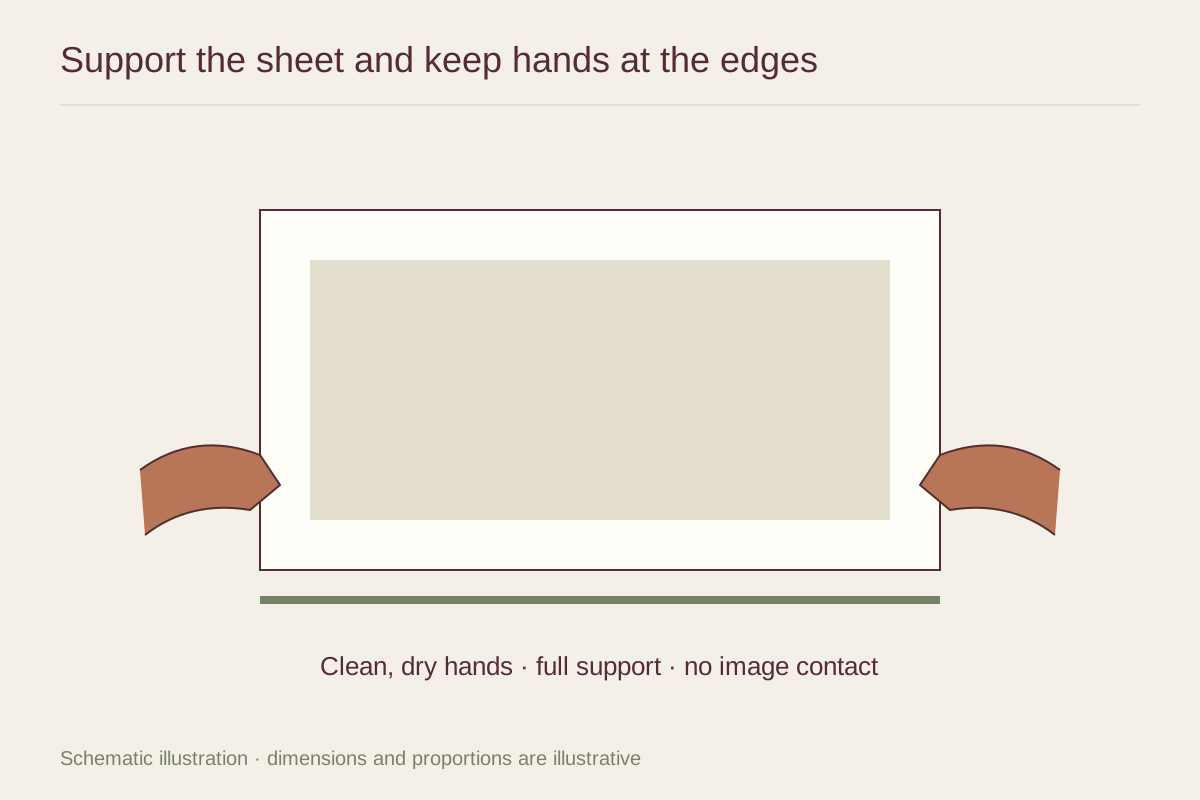
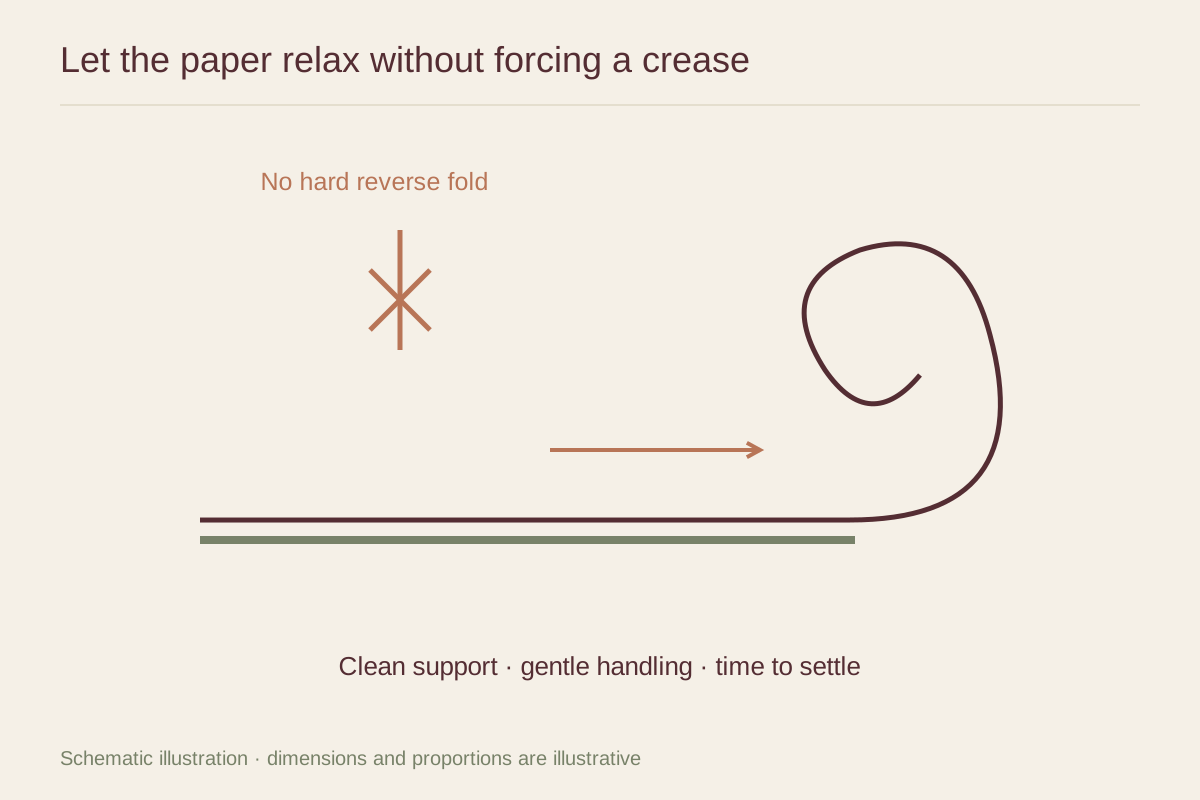
Follow the printer's specific guidance and keep the sheet supported as it opens. Do not reverse roll it tightly, crease it against the table, or use your palm to rub the curl away. A smooth-looking result obtained by pressure may conceal a damaged coating or a new crease.
Avoid irons, hair dryers, steam, sprays, and improvised humidification. These are not general ways to prepare a poster for a frame. Similarly, a heavy stack of books can create uneven pressure and surface contact that the print was not made to tolerate. Persistent curl is a framing question, not a reason to escalate a home flattening experiment.
Plan the next stage before leaving it out
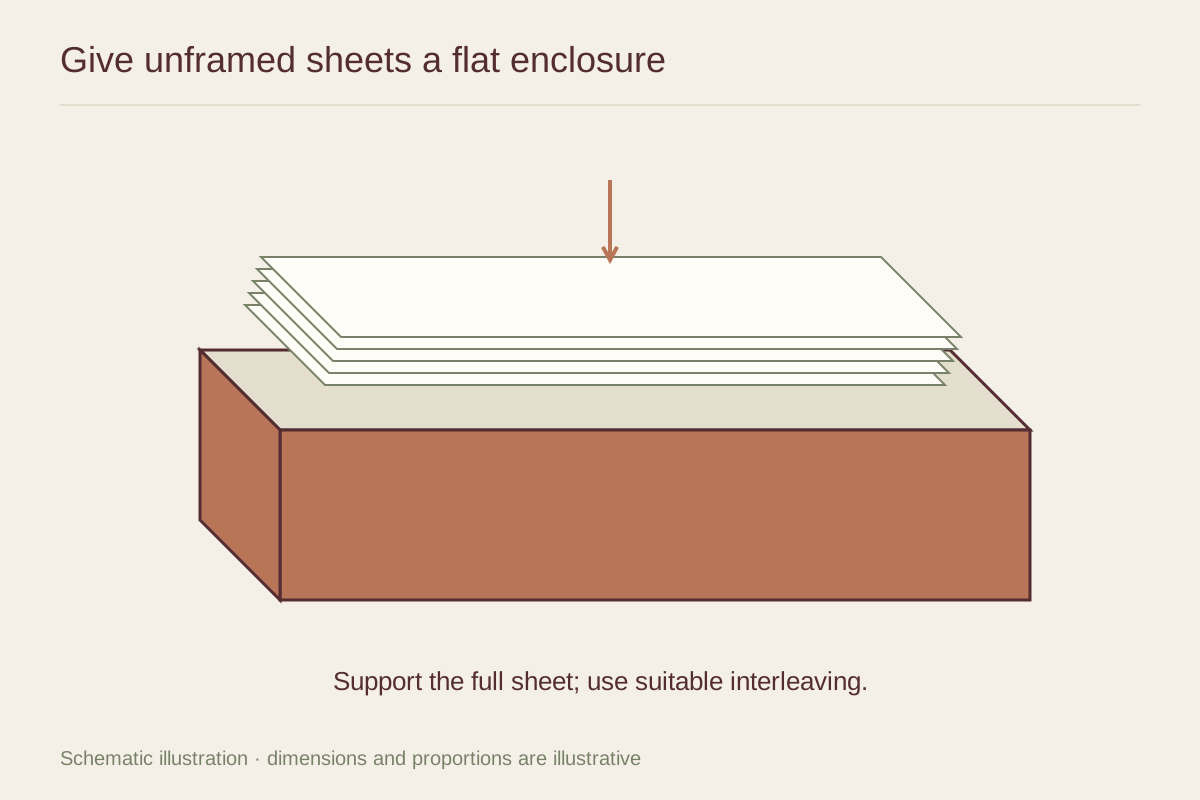
Once the poster can be inspected safely, check its dimensions, crop, and condition. Arrange appropriate flat storage or a framing appointment rather than leaving it exposed on a table for days. If it cannot safely lie flat, ask the supplier or framer how it should be protected until the appointment.
Tell the framer how it arrived and what handling has occurred. Keep any printed care instructions with the order record. A poster does not have to look completely flat on your table to become a well-presented framed object; the mounting method should suit the actual sheet and preserve future options.