Observe the wall, not just the window
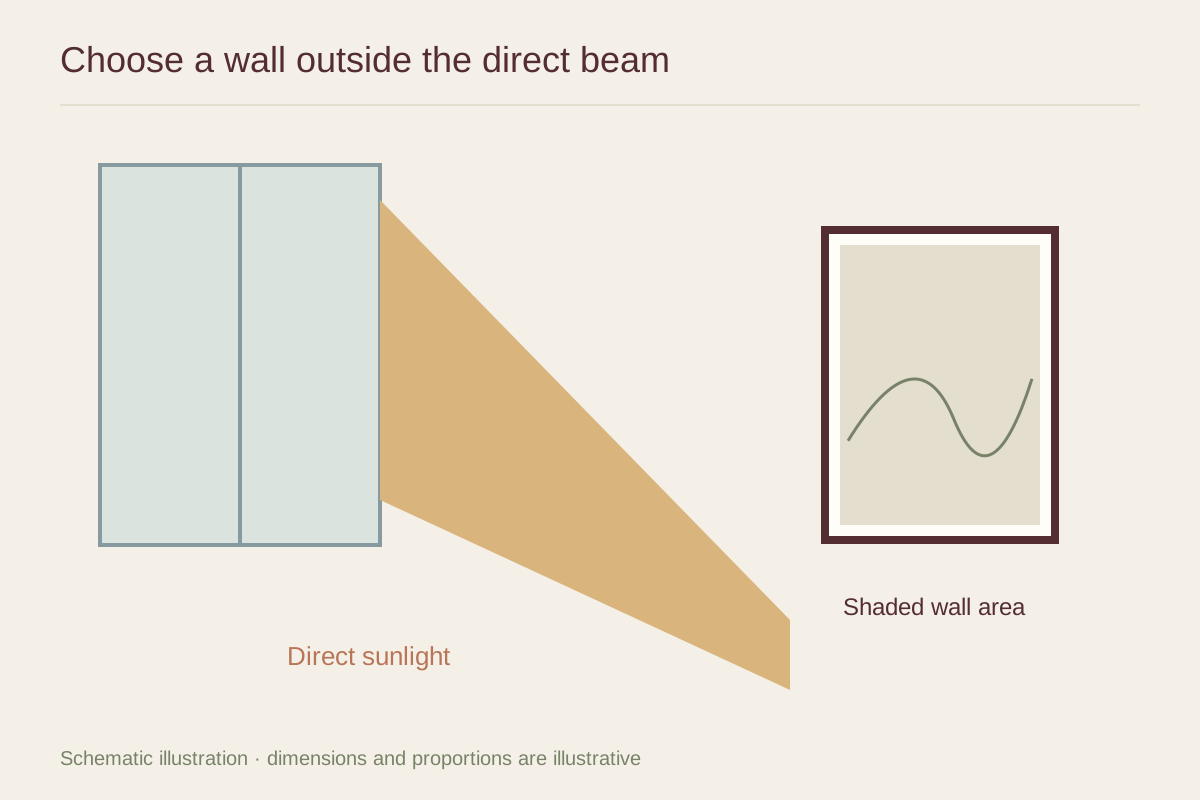
Check the proposed position in the morning, around midday, and later in the afternoon. A narrow window can send a concentrated strip of sun much farther into a room than expected. Photograph the wall at those times or make a simple note of when the bright patch reaches it.
Repeat the check when seasons change. The sun's path and the amount of shade outside can change, particularly when nearby trees lose their leaves. A wall that seemed protected during one month may be exposed during another. Do not rely solely on the compass direction of the room.
Choose a location you can maintain
A display that depends on closing a blind at exactly the right time every day may be difficult to sustain. If the routine does not fit your life, choose another wall. A less prominent position can be a better home for a print than a dramatic sunny spot with an unrealistic care plan.
Look for an interior wall or an area outside the direct beam, while also considering heat, moisture, and traffic. A shaded corner immediately above a radiator solves one problem by introducing another. Evaluate the whole location rather than treating light as the only condition that matters.
Understand the limit of protective glazing
UV filtering glazing reduces ultraviolet exposure, but visible light can also contribute to deterioration. It cannot make direct sun a harmless display condition. NEDCC explains that light damage accumulates and does not reverse when the object is returned to darkness.
Use glazing as part of a suitable framing package and combine it with sensible placement. If a seller promises a long print life, read the conditions behind the claim. A tested result for particular materials under specified conditions is not a promise for any room, any frame, and any amount of sunlight.
Choose what belongs on continuous display
A replaceable decorative print and an irreplaceable family photograph may deserve different display plans. For a particularly sensitive, older, or valuable paper work, ask a conservator about the location and duration of display. A reproduction may allow you to enjoy the image while keeping the original in appropriate storage.
Rotation can reduce the time an object spends on the wall, but it is not a reset for previous exposure. Keep a basic record of when an important print is displayed and where. That record can be useful when discussing its condition with a professional later.
Make the room work with the safer wall
If moving the print leaves an awkward gap, adjust the arrangement rather than putting it back into the sun. A mirror, an appropriate non-paper decorative object, or simply open wall may serve the exposed area differently. Choose those objects according to their own material needs as well.
Use paper templates to test the new position with furniture. Sometimes shifting a frame to the side of a cabinet creates a more interesting arrangement than centering it in the brightest place. A paired display can also move together so the relationship between the images is retained.
Check changes during ordinary room care
When you move furniture, change curtains, or replace a lamp, look at the print's exposure again. A new mirror can redirect a bright patch, and a removed shade can alter a previously suitable wall. These changes are easier to catch as part of routine room adjustments than through a separate complicated inspection schedule.
If you notice fading or a color change, move the work out of the problematic light and seek advice for an important object. Do not try to restore color with sprays or coatings. The useful next step is to reduce further exposure and understand the materials, not to disguise the change.