Choose the location before the box
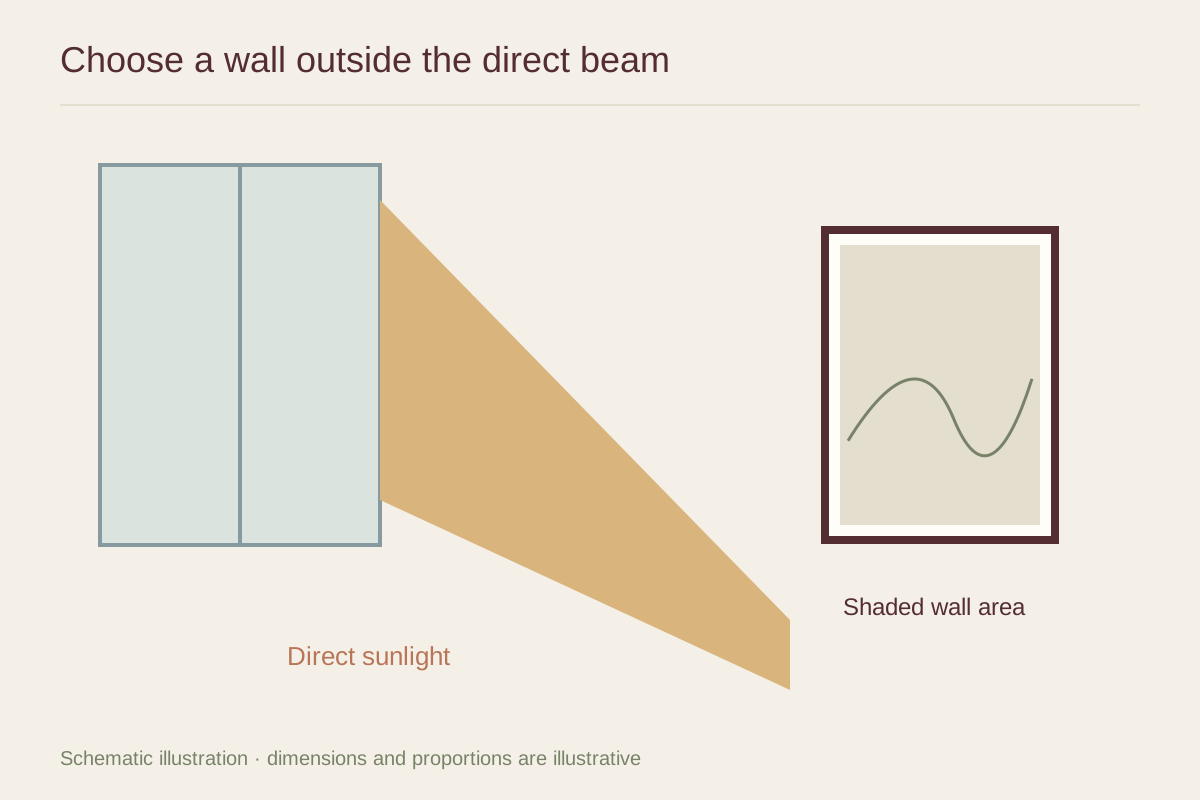
Look for a clean, stable area away from likely leaks, damp exterior walls, heating equipment, and large environmental swings. Attics, basements, and the floor beside plumbing are poor default choices. The Library of Congress recommends supportive enclosures and a cool, relatively dry, stable environment for works on paper.
Measure the available shelf or drawer against the complete enclosure, not just the print. The box should be fully supported and easy to retrieve without tilting or squeezing it. If it is too large for the shelf, find a different location rather than letting one edge hang unsupported.
Give each sheet appropriate support
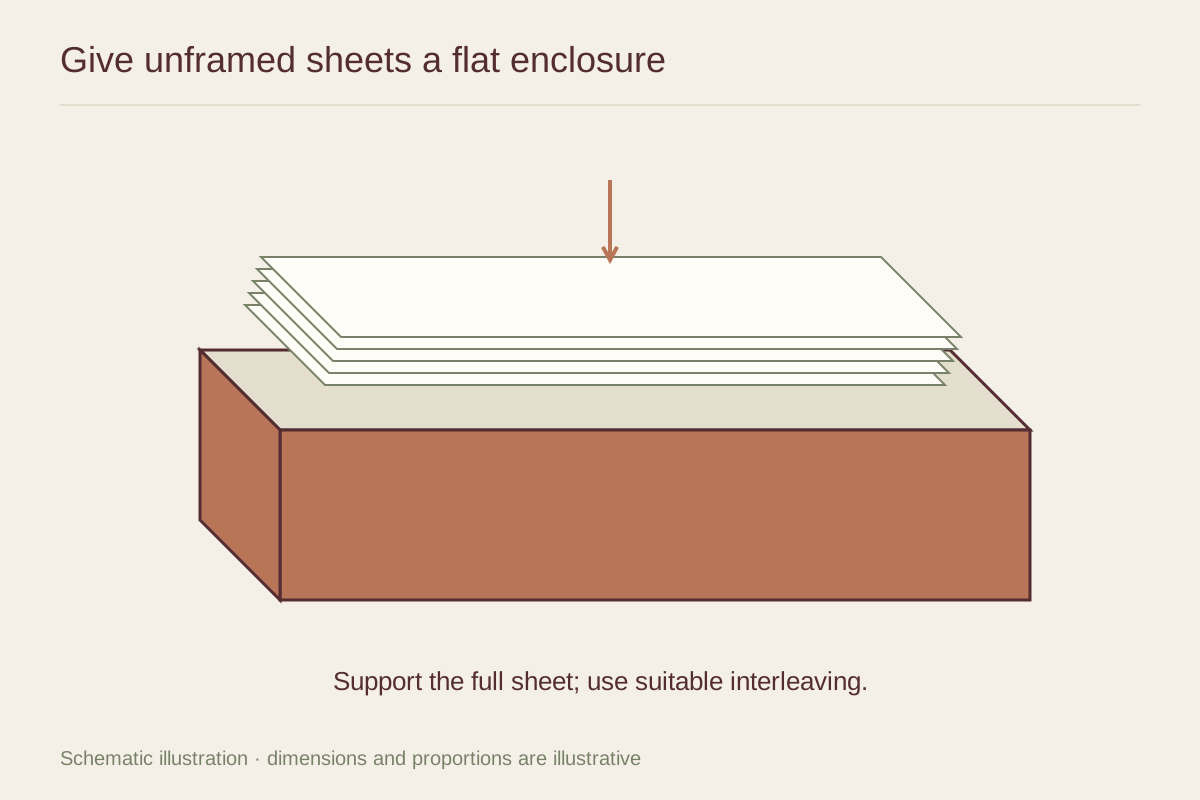
Use a preservation-quality folder or other enclosure suited to the print's materials and dimensions. Acid-free and lignin-free paper materials are useful specifications, but some media have special requirements. For photographs, ask about enclosures tested for photographic use; for powdery or flaking surfaces, obtain professional advice before choosing a sleeve or interleaving material.
Avoid assuming that a clear plastic sleeve is suitable for every object. Static and direct surface contact can be problematic for some media. If you do not know how the image was made, identify it or ask a conservator before placing it against an unfamiliar material.
Avoid pressure and overfilling
Do not use a pile of books to flatten prints in storage. A storage box is meant to house supported sheets, not to press them into a new shape. Keep heavy objects off the lid and avoid packing so many prints into one enclosure that removing a sheet requires dragging it against its neighbors.
Separate objects of very different size or bulk so small hard edges do not concentrate pressure on a larger print. A mounted photograph and a loose thin poster may need separate housings. NEDCC notes that uneven pressure can result when objects of different bulk and weight are stored together.
Label the enclosure, not the image
Give each folder a short identifier and keep a list of its contents. A thumbnail photograph can help you find the desired print without opening every folder. Put notes on the housing or in a separate record rather than adding adhesive labels or sticky notes to the artwork.
Record the full sheet dimensions, title if known, printing process if supplied, and any special care instructions. Keep purchase documents separately if their paper or ink is unsuitable for direct contact. The record should help you retrieve the print with less handling, not make the storage system harder to use.
Plan access for large sheets
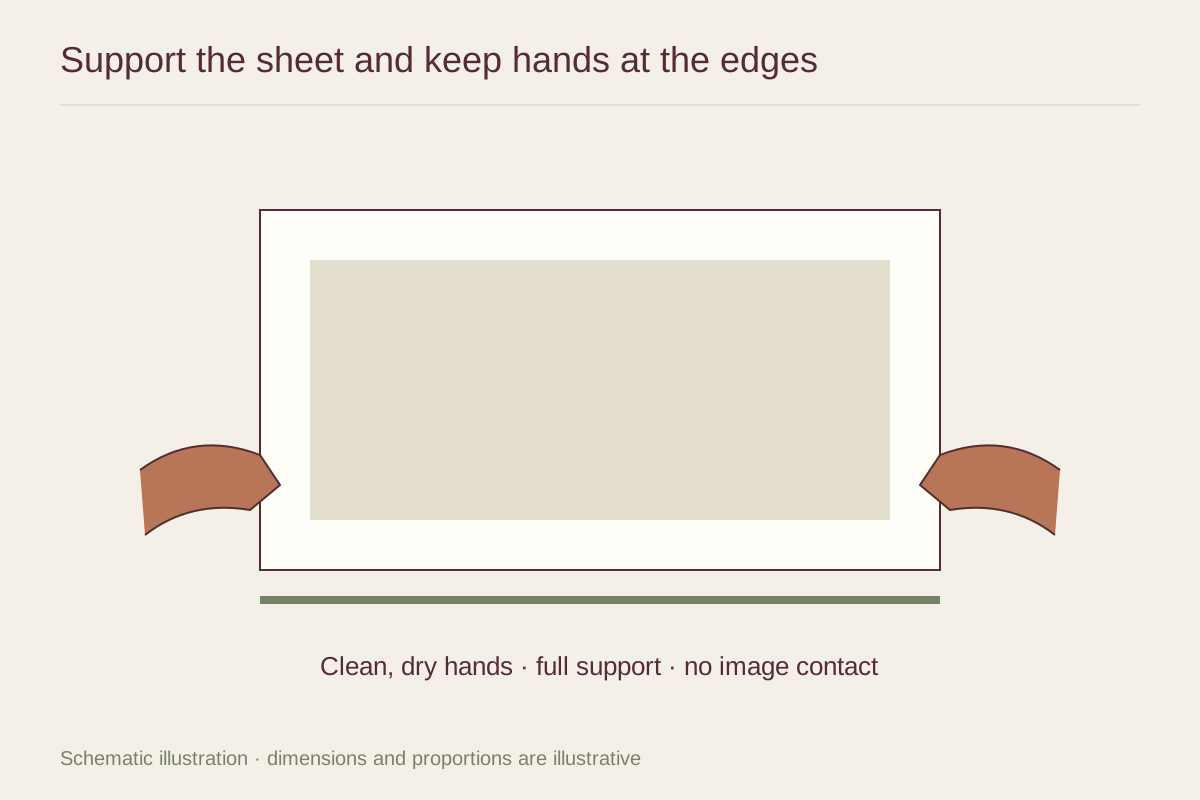
Before opening the box, clear a table large enough for the entire enclosure. Move a large print on a rigid support rather than carrying it by its corners. Ask another person to help if the size makes control difficult. The Canadian Conservation Institute emphasizes supported movement and minimizing unnecessary handling for paper objects.
Return the print to its enclosure before using the table for another task. A sheet left out while you answer a call or prepare a drink is exposed to avoidable accidents. Keeping the storage location close to a suitable work surface can make the careful routine easier to follow.
Inspect without repeatedly disturbing the contents
Check the outside of the enclosure and the storage area for signs of dampness, pests, or accidental pressure during ordinary household checks. You do not need to shuffle through every sheet frequently. If there is a change in the room, such as a leak or a heating problem, inspect the affected storage more closely and seek help for damaged items.
If a print is stuck, moldy, brittle, or distorted, do not force it flat to make it fit the folder. Keep it supported and consult a paper conservator. Flat storage is a preventive arrangement for an object that can safely lie flat, not a home treatment for one that cannot.