Keep the original instructions with it
Check the supplier's guidance for how long and under what conditions the print may remain packed. Some products need particular handling after delivery. If instructions are absent, ask the printer rather than assuming every paper and coating behaves the same way.
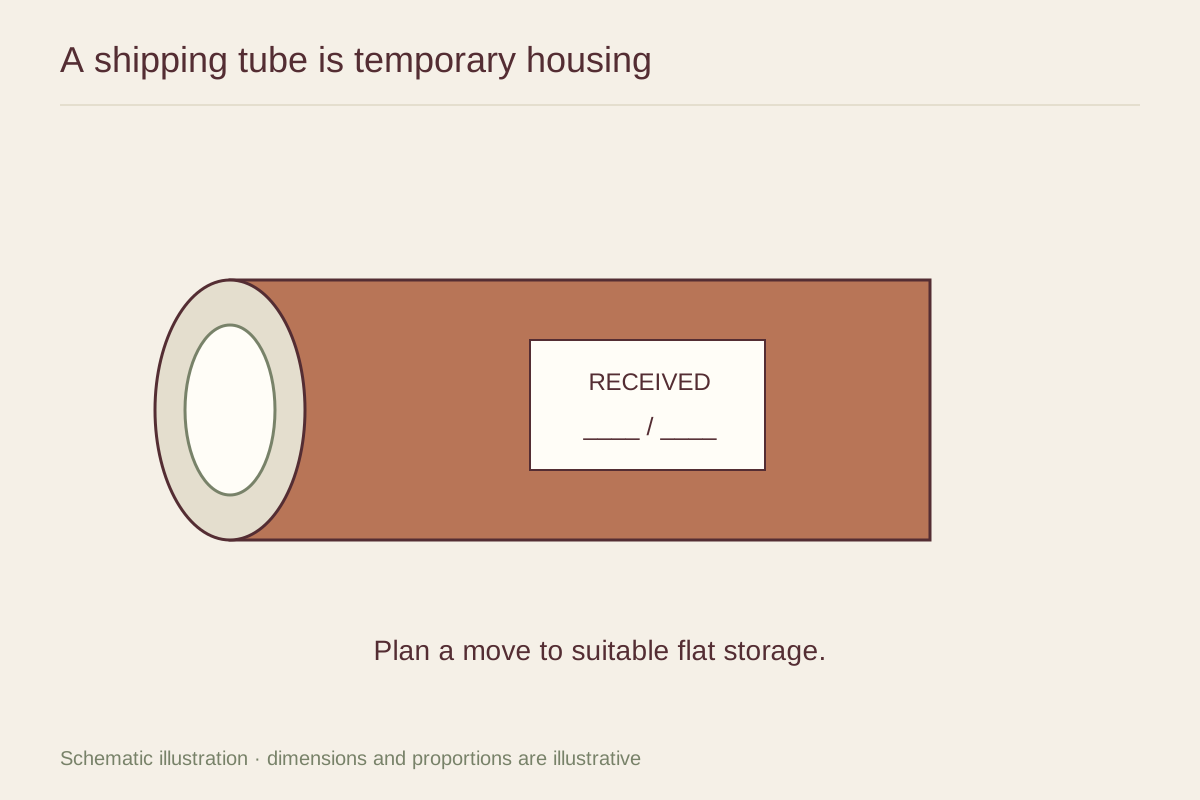
Label the outside of the tube with the print's title or identifier, order date, and intended next step. Keep the full sheet dimensions in a separate record if you know them. That makes it possible to plan a frame without opening the tube just to remember what is inside.
Choose a protected temporary location
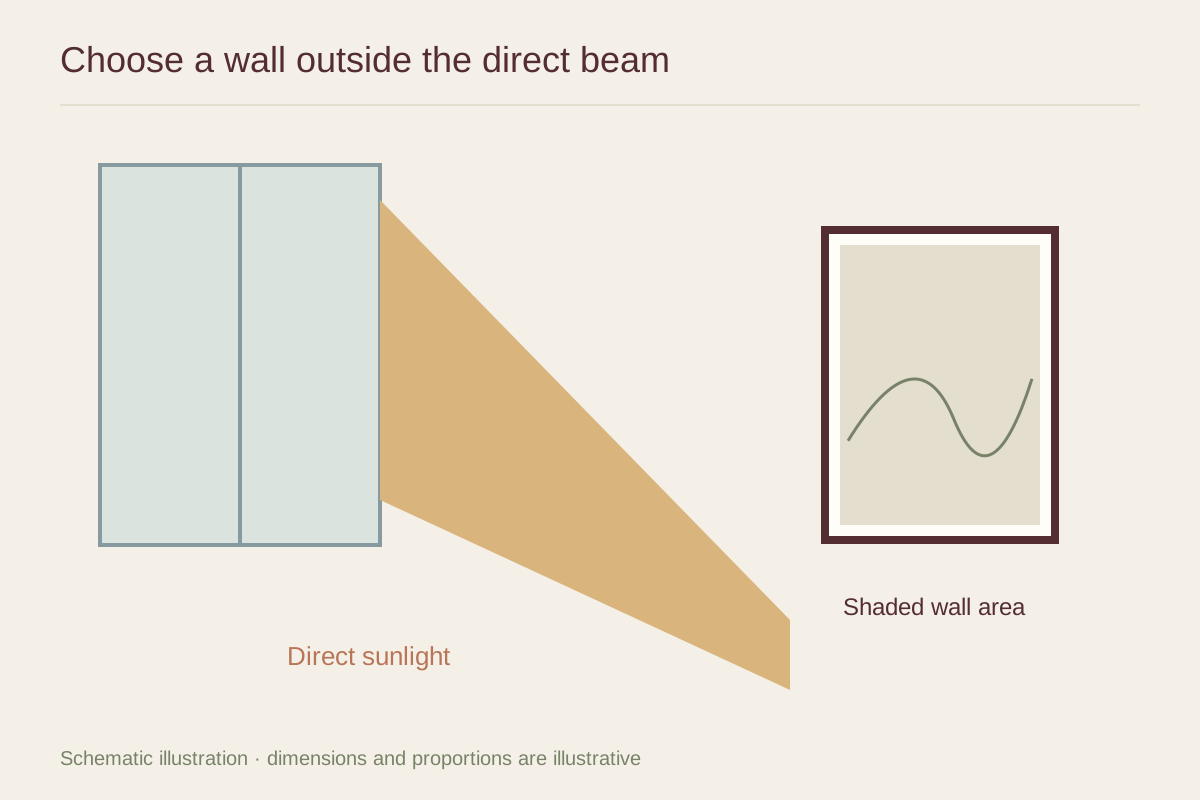
Keep the tube in a stable, dry indoor area away from direct sun, heat sources, leaks, and busy traffic. Support it so it cannot roll off a shelf or be crushed by boxes. Do not leave it standing where it can fall against a door or be mistaken for disposable packaging.
If the tube or contents become damp, crushed, or otherwise damaged, do not simply transfer the rolled print into another tight container. Document the condition and contact the supplier or a conservator as appropriate. The immediate problem may require more than different packaging.
Avoid making the roll tighter
Do not compress the print to fit a smaller tube or add rubber bands around the sheet. Avoid placing adhesive directly on the paper or its image surface. Repeated handling introduces opportunities for creasing and abrasion, so leave the print protected while you organize the next step.
For an older, fragile, or valuable work, ask a conservator about storage instead of extending a temporary arrangement indefinitely. A rolled object may need a specific support system, and a tube that was adequate for delivery may not meet those needs.
Set a clear destination
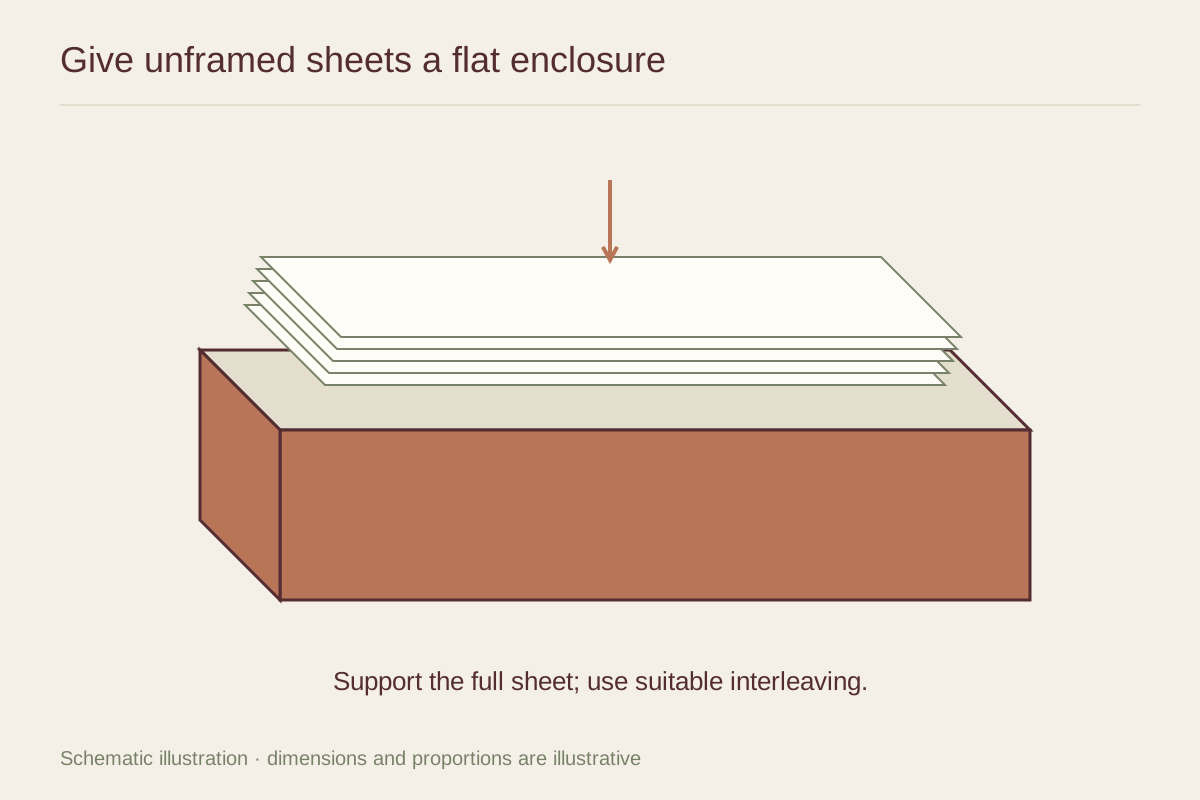
Arrange a framing appointment or an appropriate flat enclosure as soon as practical. Measure the storage furniture before purchasing a box so the full enclosure will be supported. If the print cannot be safely unrolled, let the professional handle that transition.
The useful distinction is between a short planned pause and forgotten storage. A labeled tube with a known next step is easier to manage than an unidentified roll that remains behind a cabinet for years. Keep the packaging until the print is accepted and safely housed, then retain only what has a continuing purpose.