Recognize reasons to stop handling
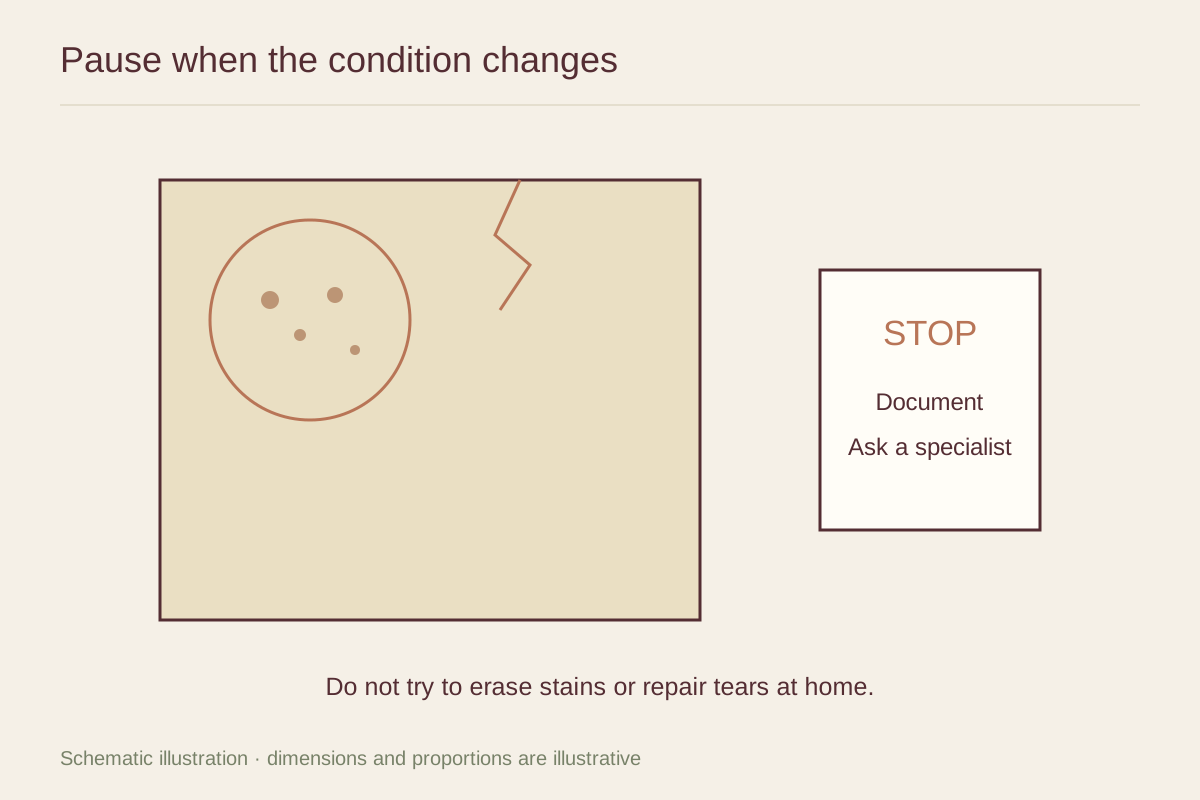
Seek advice if the paper is brittle, tearing, flaking, stuck to glazing or an enclosure, or showing a new stain or distortion. Suspected mold, water exposure, and damage from an adhesive also warrant professional attention. Do not test a fragile area by bending it, rubbing it, or lifting a stuck corner.
A print may need advice even without visible damage. An irreplaceable family work, an unfamiliar photographic process, or an older print on an unknown backing can justify a consultation before reframing. The question may be how to display it safely, rather than how to make it look new.
Distinguish conservation from routine framing
A framer builds a presentation and support system. A conservator assesses materials and condition and may recommend treatment or preventive care. Some professionals offer both services, but the roles should be clear. Ask who will examine the object and what qualifications and experience they have with that type of paper or photograph.
The American Institute for Conservation maintains a directory of professional members, with specialties including art on paper and photographic materials. Use the relevant specialty when searching and discuss the particular object with the professional. A directory listing is a starting point for that conversation, not a substitute for agreeing on scope and expectations.
Prepare a useful first inquiry
Provide a full photograph, close views of the concern, the approximate dimensions, and any known creator, date, printing process, or previous treatment. Explain when the change appeared and whether there was a leak, fall, or other event. Keep descriptions factual: brown mark at the lower edge is more useful than a guessed diagnosis.
Mention whether the print is framed, rolled, mounted, or loose, and whether you can safely move it. Do not dismantle a fragile frame to produce better photographs unless the professional instructs you to do so. Ask how the object should be transported or whether an initial remote discussion is appropriate.
Protect it while waiting
Keep the object supported and away from the condition that caused the concern, if it can be moved safely. Avoid adding tape, glue, weights, sprays, or household cleaning products. Do not apply heat or moisture to flatten a distortion or loosen an attachment. Those actions can change the materials and complicate later treatment.
If the object is wet, moldy, broken behind glass, or actively shedding material, explain that promptly when seeking help. Follow situation-specific professional guidance rather than sealing it into a guessed storage arrangement. Different emergencies require different responses, and a general article cannot identify the right treatment from a description alone.
Discuss goals and limits
Tell the conservator what matters most: stabilizing a tear, retaining an inscription, preparing for display, or understanding whether a mark can be reduced. Treatment may improve condition without removing every sign of age. Ask what outcomes are realistic, what risks or limitations remain, and whether doing less is a reasonable option.
Request a written proposal describing the work, estimate, documentation, and any necessary approval points. If the recommendation is preventive care rather than treatment, ask for clear instructions about framing, storage, and display. A successful consultation can be a better housing plan rather than a visible transformation.
Keep the treatment record
Retain examination notes, before-and-after photographs, treatment details, and care recommendations with your print records. These help a future framer or conservator understand what has already been done. Do not attach the paperwork directly to the artwork or discard original labels without advice.
When the print returns home, follow the agreed display and storage guidance. If its room or frame changes later, review those recommendations again. Conservation is most useful when the object's ongoing surroundings support the work that was done, and when future decisions begin with a record rather than a guess.