Notice changes around the frame
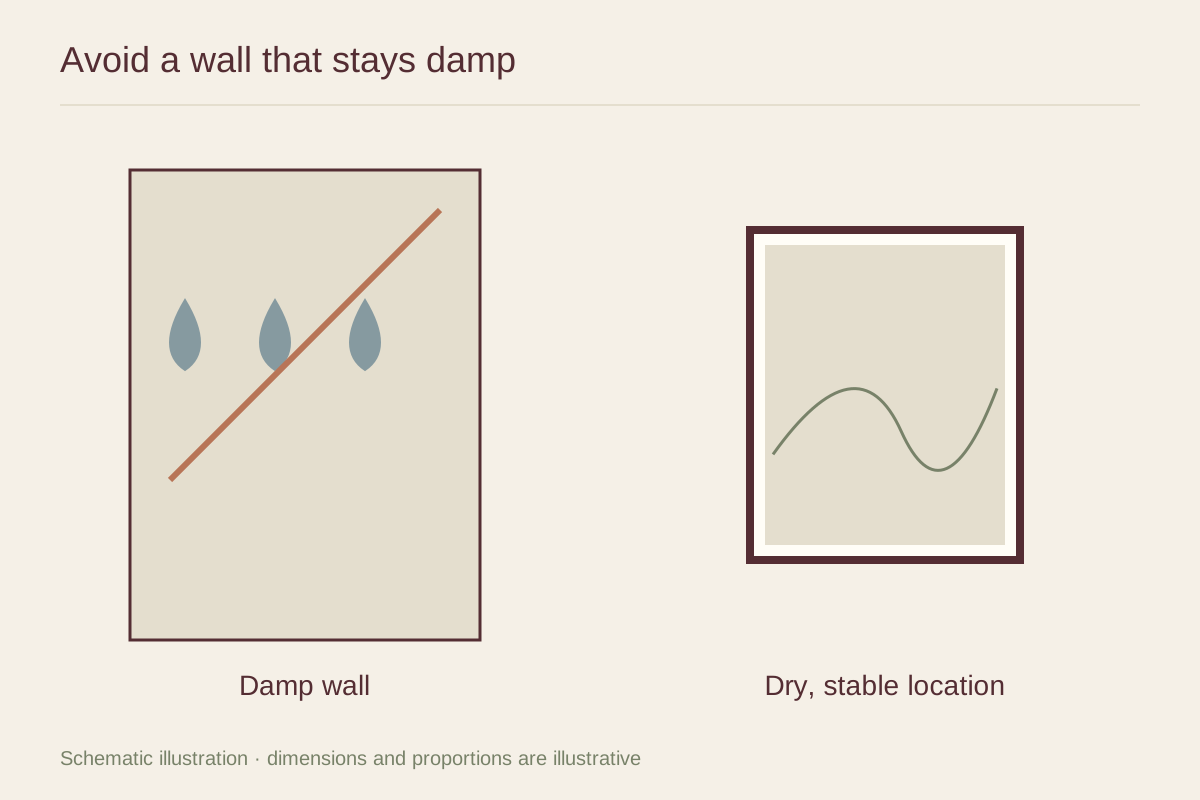
Look for staining, peeling paint, condensation, a persistent musty smell, or changes in the frame backing. These signs do not identify the cause by themselves. They may relate to a leak, condensation, or another issue that needs appropriate building maintenance.
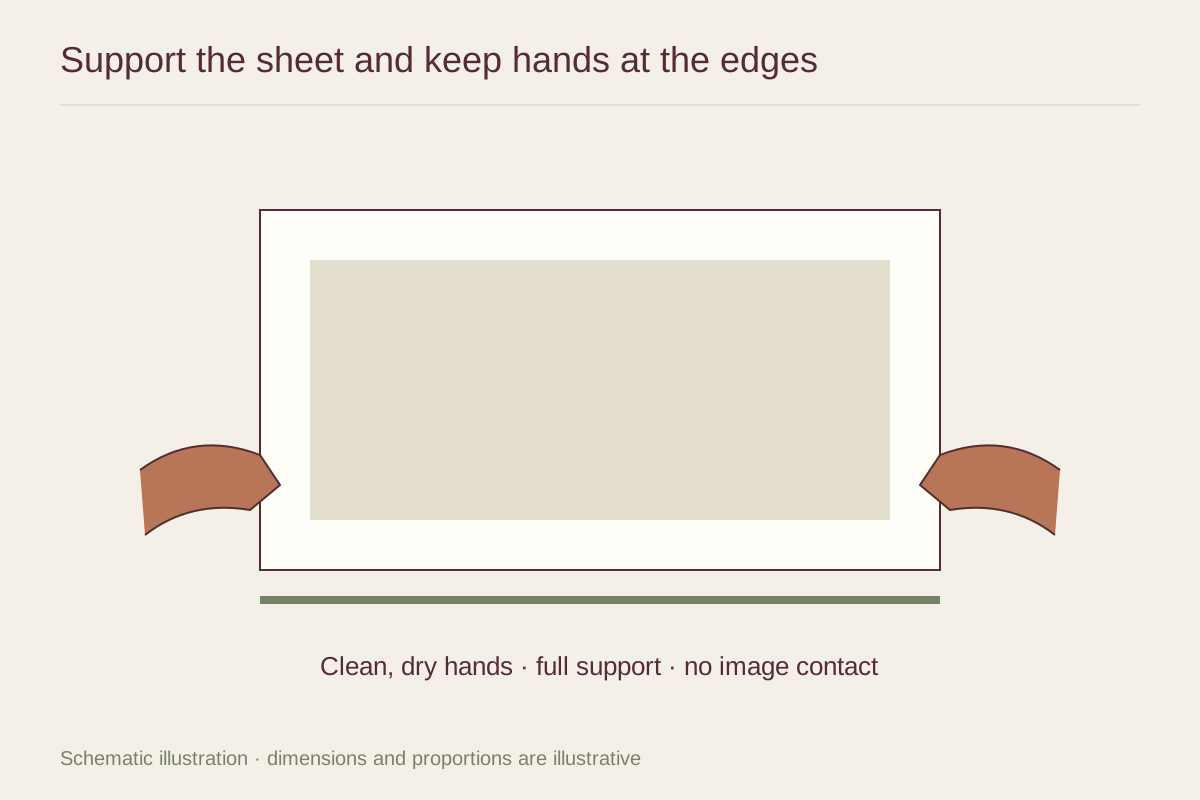
If the frame is damp or mold is suspected, minimize handling and obtain advice about both the wall and the object. Do not brush or vacuum suspected mold from the artwork in the living area. Keep people from disturbing it while you arrange suitable professional help.
Choose another wall on its own merits
An interior wall away from plumbing and frequent moisture may be a better option, but inspect the actual conditions. A bathroom-adjacent wall, an unheated room, or a place near a vent can still have problems. Paper artwork benefits from a stable environment rather than a location selected by room name alone.
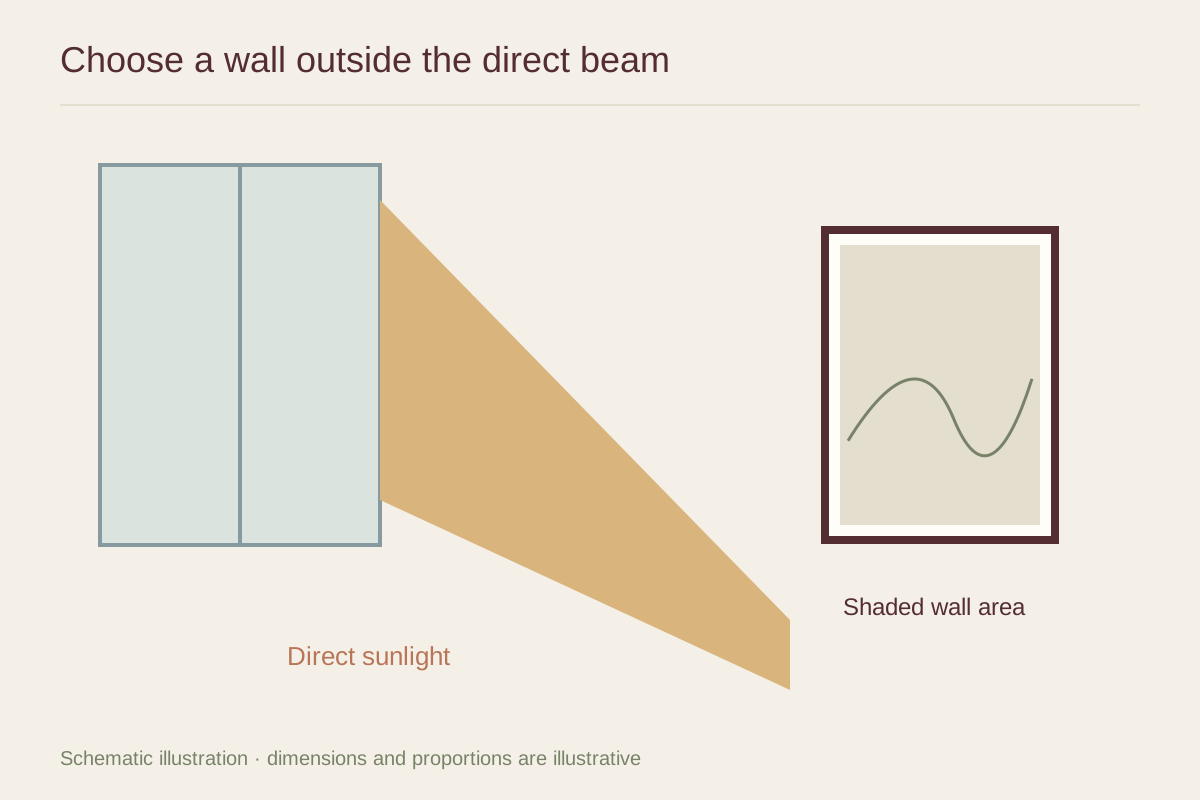
Use a paper template to plan the new position before moving the frame repeatedly. Check daylight, traffic, and the attachment points as well as dryness. A safer location should not create a new problem such as direct sun or a frame projecting into a narrow route.
Do not hide the evidence
Avoid sealing a damp backing, painting over a stain behind the frame, or applying a home drying treatment to the print. Those actions can obscure a problem without resolving it. Document visible changes with photographs and explain when they appeared to the relevant professional.
A framer can assess the frame construction, while a conservator should assess damaged or valuable artwork. The building issue may require a separate contractor. Keeping those tasks distinct helps each person address the actual source of concern instead of treating the frame as if it could manage the room's moisture.
Return the artwork only after conditions are suitable
Wait until the source has been corrected and the wall is appropriately dry before considering another display there. Follow the maintenance professional's guidance rather than judging only by whether the paint feels dry to the touch. For an important paper work, seek conservation advice about the location.
Keep the condition photographs and note any change in the print or frame. If the object shows staining, distortion, adhesion, or a new surface problem, do not rehang it without assessment. The decision may be to use a different wall permanently, which is often simpler than asking a vulnerable object to tolerate an unreliable location.