Give the object a simple identifier
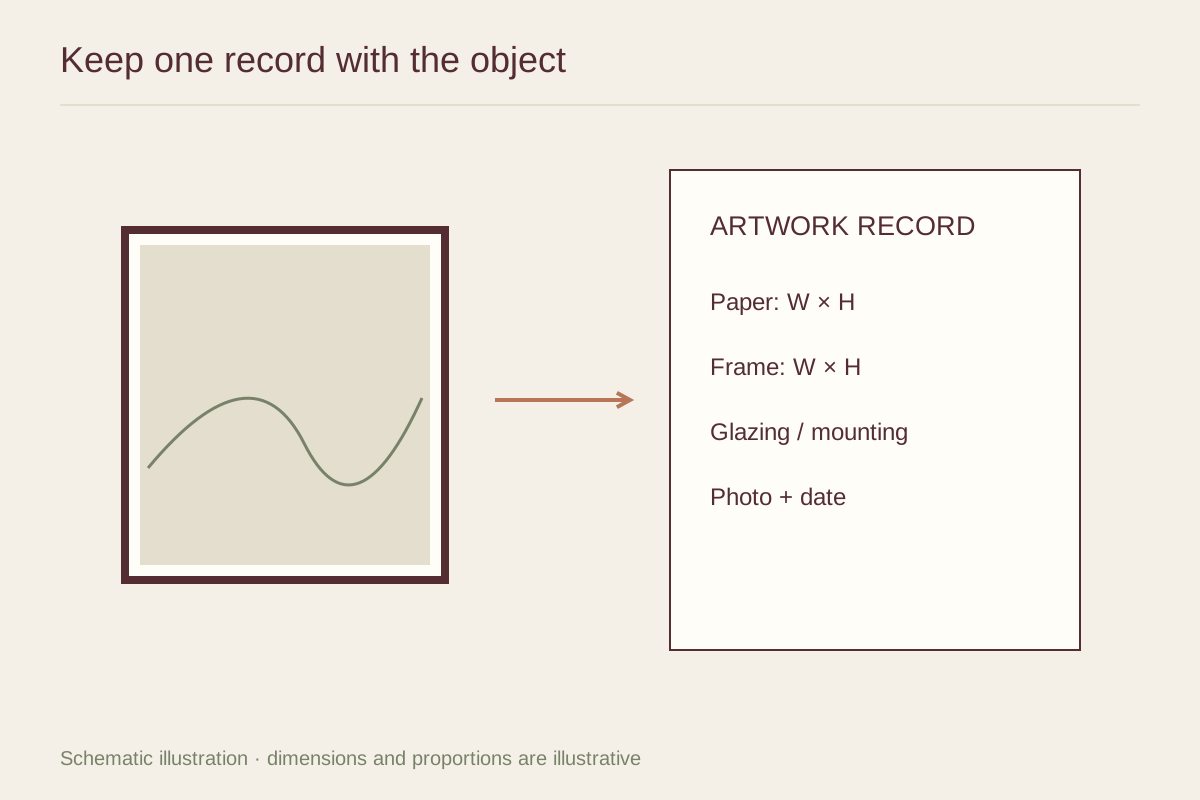
Use a title, a descriptive name, or a short number that makes sense to you. Pair it with a thumbnail photograph so two similar landscapes are easy to tell apart. Keep the identifier on the record and protective enclosure rather than writing it on the artwork.
Record the creator and print process when known, along with the seller, purchase date, and order reference. Mark uncertain information as unknown instead of inferring it from appearance. A confident but incorrect process label can mislead someone making a later care decision.
Name the dimensions
List the full sheet size, image size, mat opening, and outside frame size as separate entries. Use width by height and state the units. Add the frame's depth if it matters for a narrow wall or storage location. A single unlabeled measurement such as 11 by 14 is much less useful later.
Include the finished weight and the hanging method if known. A photograph of the back can show the hardware arrangement without requiring the frame to be removed again just to remember it. Keep the wall fastener instructions with that image when they apply to a specific installation.
Record materials that affect care
Save the glazing manufacturer and product name, mat color code, backing details, and mounting description supplied by the framer. These details help with cleaning, matching a companion frame, and understanding what a future reframing would involve.
Note any care guidance from the printer or conservator. Keep treatment records and original invoices in the same digital folder or clearly associated physical file. A receipt saying custom frame is less useful than a specification naming the actual glazing and mount.
Update only when something changes
Add a dated note after reframing, moving, or a condition concern. You do not need to write a report after routine dusting. The purpose is to preserve meaningful changes: new glazing, a different wall, a repaired corner, or advice from a professional.
Keep a backup of the digital records and use filenames that include the identifier. When lending, gifting, or selling a print, the appropriate records can travel with it. Even for an ordinary decorative reproduction, knowing the exact size and materials makes its next frame or display decision much easier.