Have uncertain condition assessed
If the print is brittle, torn, stained, flaking, stuck to glazing, or mounted on an unknown backing, seek a paper conservator's advice before reframing or prolonged display. Age alone does not identify every risk, and an apparently tidy frame can conceal unsuitable attachments.
Keep any labels, inscriptions, and previous framing records. Photograph them without dismantling a fragile object. They may help a professional understand the materials or treatment history. Do not remove an old backing merely to find a cleaner surface for the new room.
Compare the rooms by conditions
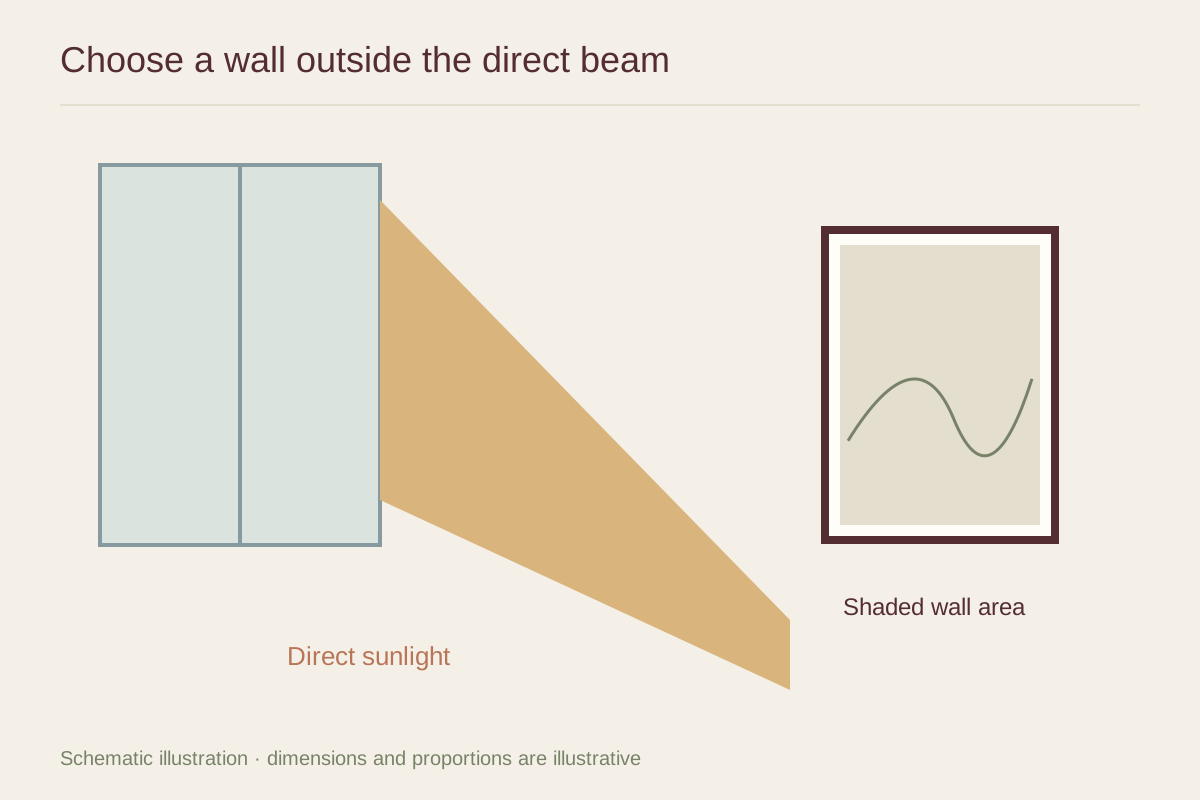
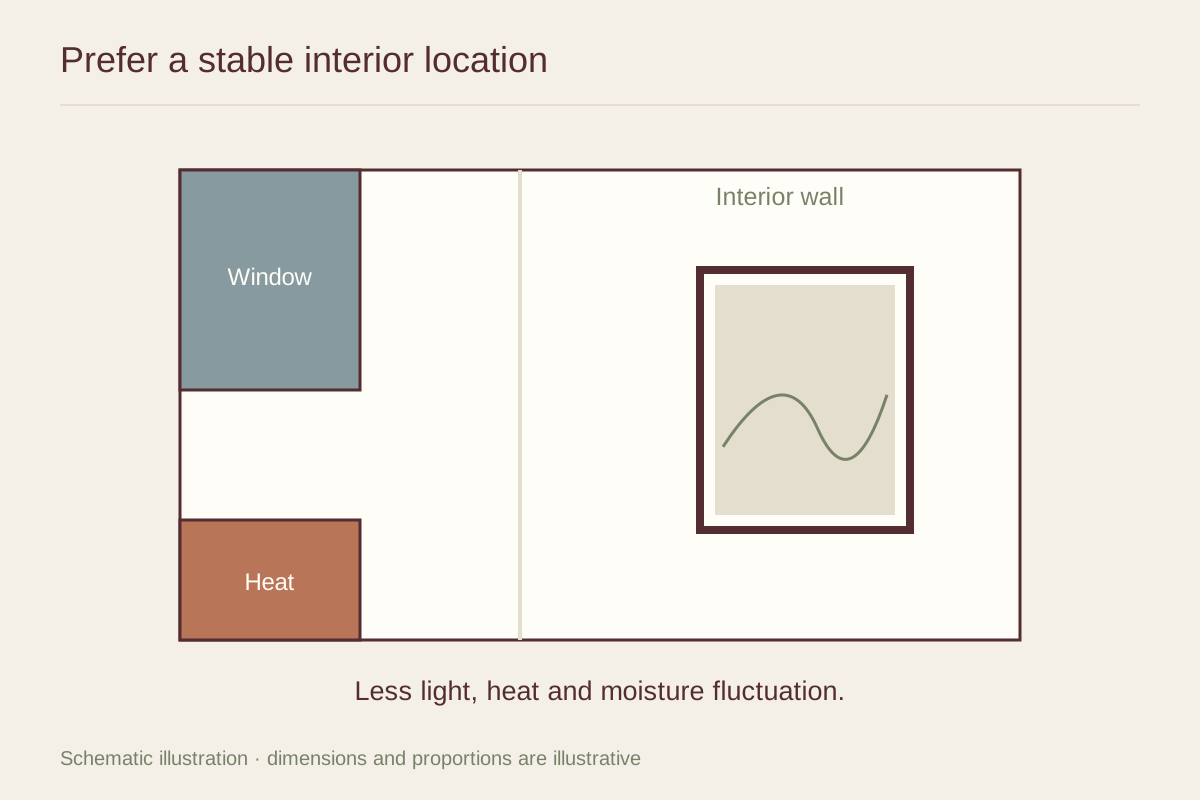
Look for a stable indoor space away from direct sun, heat sources, frequent moisture, and likely leaks. A quiet study may be preferable to a bright sunroom, but evaluate the actual wall rather than the room's name. Check whether a heating vent blows toward the frame or an exterior wall has a history of condensation.
Observe the light over the day and across seasons. Curtains and blinds can reduce exposure, but the display should fit a routine you can maintain. If the room is often unoccupied, avoid leaving display lighting on simply to illuminate the print for no viewer.
Consider a reproduction for the busiest location
A reproduction can carry the image into a heavily used or brightly lit room while the original is stored or displayed more selectively. This may be especially appropriate for a family object whose meaning matters more than showing the original paper at all times.
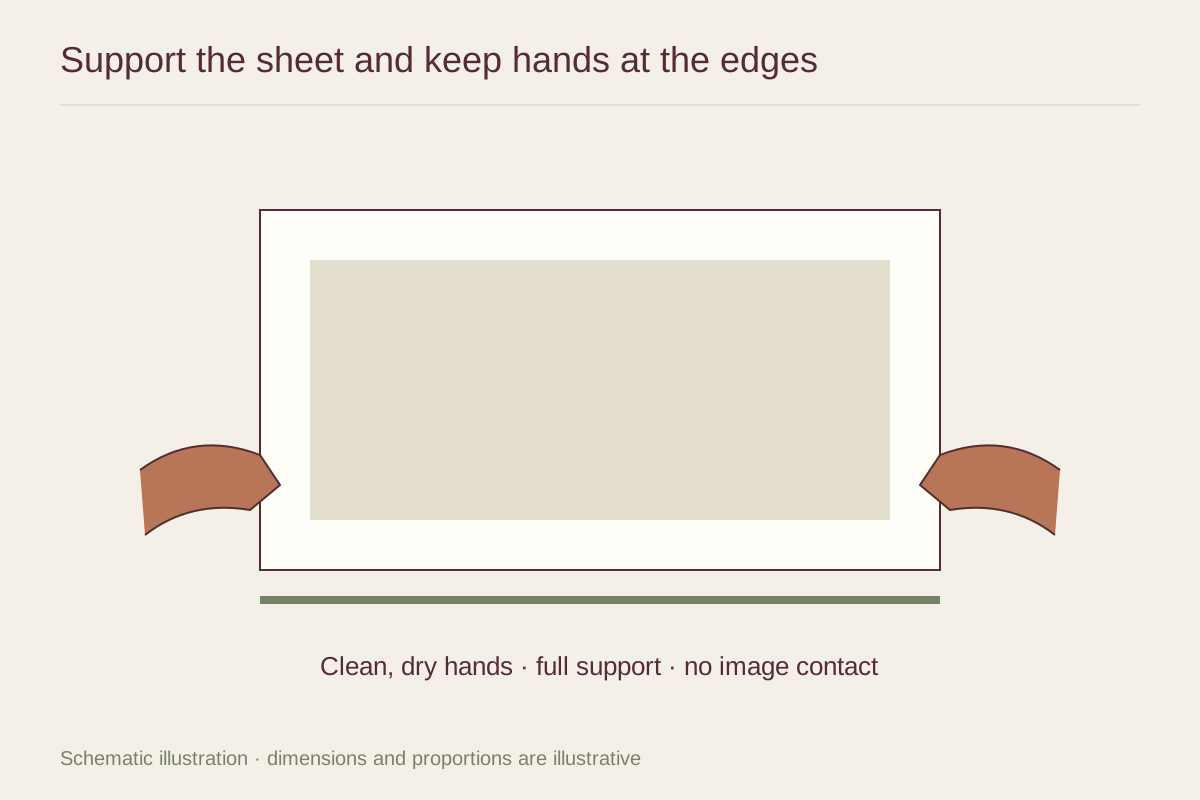
Arrange photography or scanning in a way suitable for the object's condition. Do not press a fragile sheet onto a scanner or remove it from a frame without advice just to make the copy. A conservator or qualified imaging service can help plan a safer approach for an important work.
Ask for a display plan, not a lifespan promise
A conservator can discuss suitable framing, light exposure, and whether periods in storage would be advisable. Avoid asking a glazing product alone to guarantee that the print will remain unchanged. The paper, colorants, previous damage, environment, and time all contribute to its behavior.
Keep a record of the chosen room, framing materials, and display dates. A straightforward note is enough to make later conversations more informed. Photographs can document obvious changes, but inconsistent camera lighting should not be treated as a precise color measurement.
Make the selected wall easy to use
Choose a height and position where the work can be appreciated without repeated handling. If it contains small text or detail, an accessible viewing distance may be more useful than a high central location. Keep it clear of doors, chair backs, and objects that could strike the frame.
The result may be a quieter display than you first imagined. That can be appropriate for an older print: a place where it is visible, supported, and less exposed to avoidable risks. If the room cannot provide those conditions, keep the original appropriately housed and enjoy a reproduction while you consider another location.