Calculate the group, not one frame
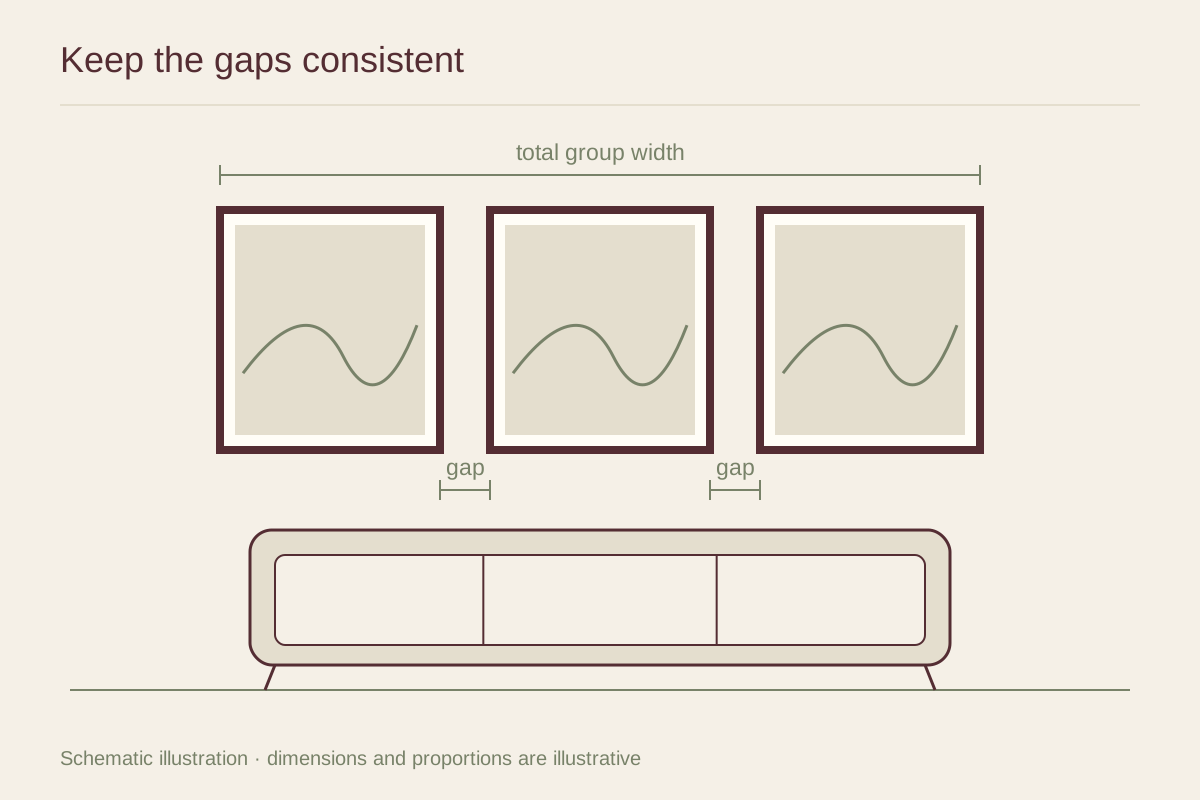
For three frames, the total width is the sum of their outside widths plus the two gaps between them. If each frame is 18 inches wide and the gaps are 3 inches, the group is 60 inches wide. That is a planning example, not a recommended width for every sofa.
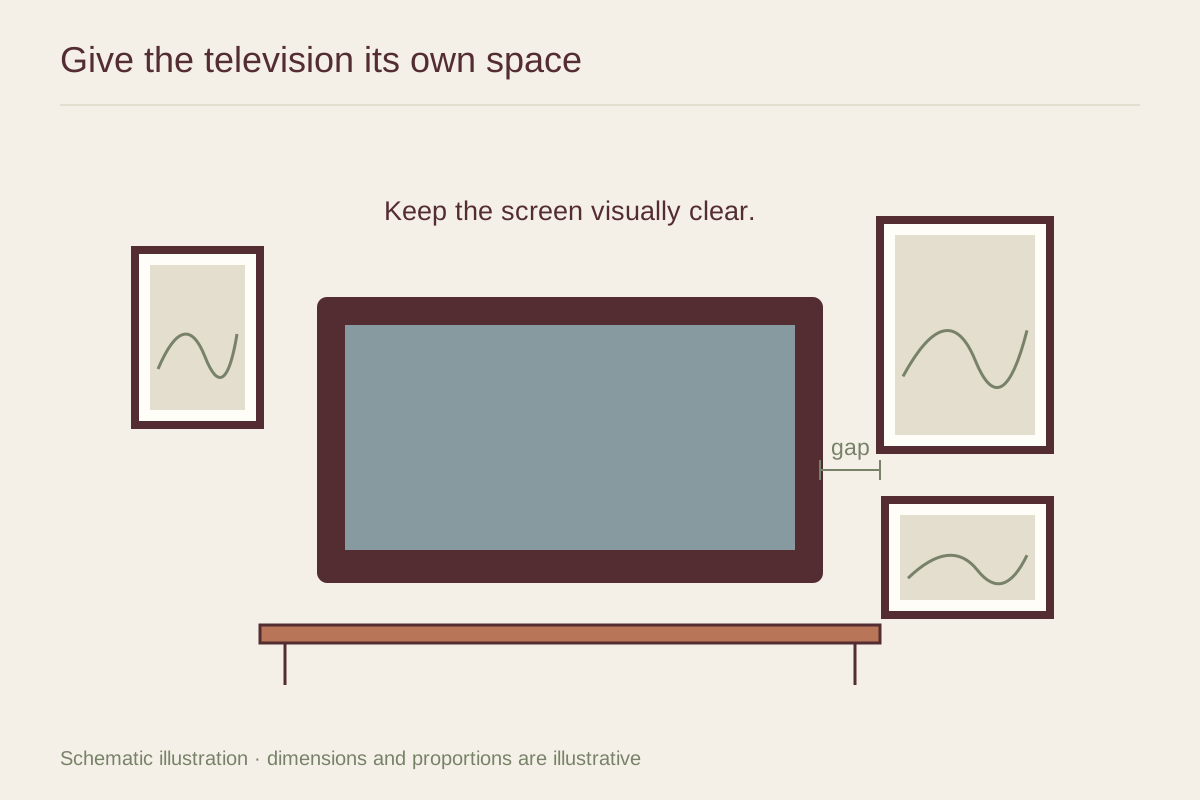
Compare that total with the furniture and the available wall. Include lamps or side tables that visually belong to the seating group. A centered arrangement may relate to the sofa alone or to the larger seating area; test both if the furniture is asymmetrical.
Choose the alignment
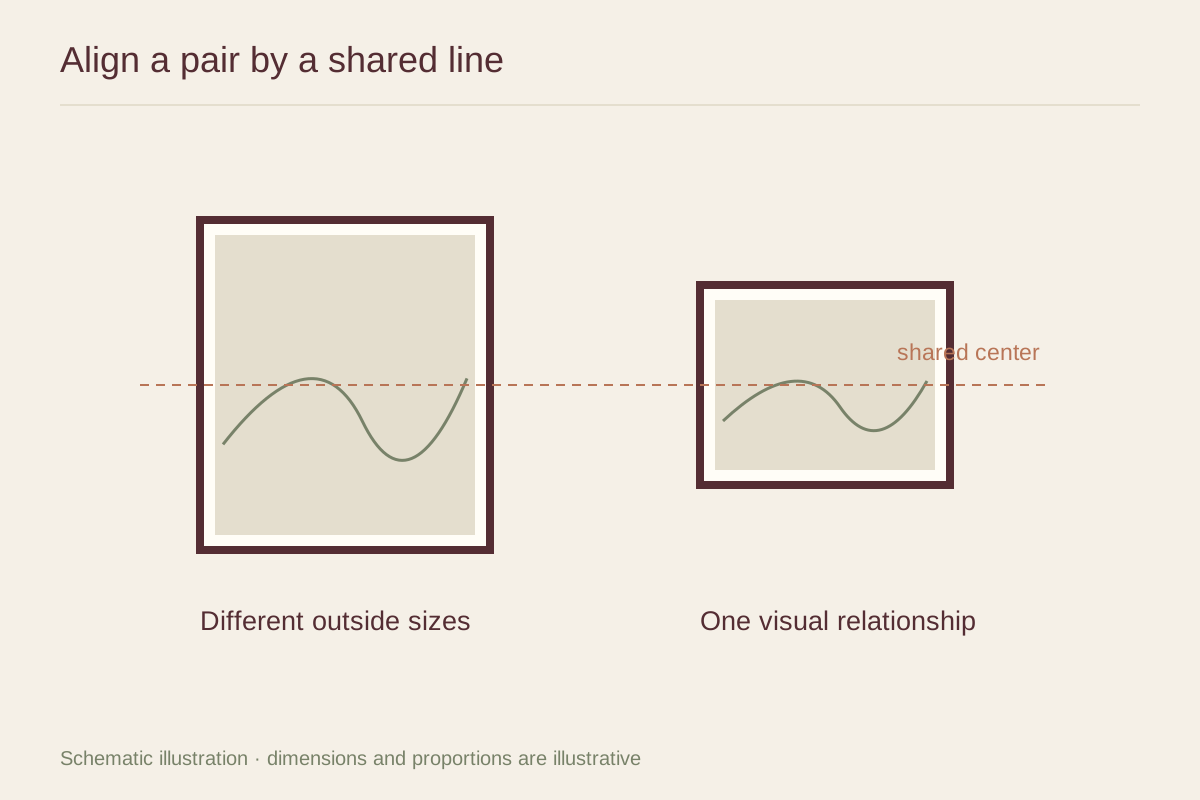
Matching frames can share a top, bottom, or center line. Equal frames make those choices equivalent, but different heights reveal the distinction. A shared center line often keeps varied subjects connected, while a common top line can give a more architectural rhythm.
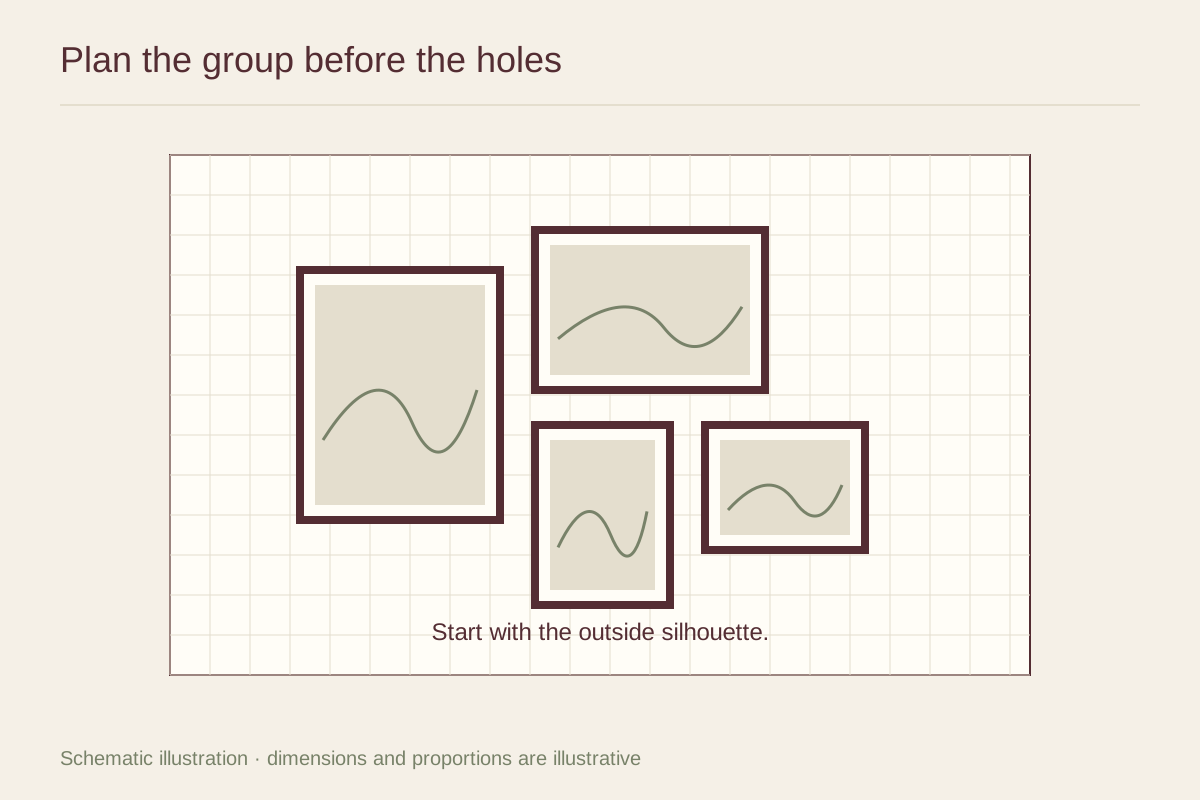
Use paper templates with the image areas marked. Identical outside dimensions can hide different mat openings, and those openings affect the perceived alignment. A small dark image may seem heavier than a large pale one, so compare the actual compositions as well as the rectangles.
Adjust the gaps in the room
Begin with equal gaps, then step back. If the frames have wide profiles, a gap that looked generous on a sketch may feel tight. If the pictures are small, a broad gap can break the group into unrelated objects. Change both gaps together before trying an intentionally uneven arrangement.
Check the height from seated positions and make sure the sofa's back cushions do not intrude into the frames. Measure the hardware on each frame individually when installing. A repeated layout is especially sensitive to small errors, so use the final frame edges and a level to verify the result rather than assuming identical hangers were fitted identically.
Keep the middle picture from drifting
With equal-size frames, mark the center of the whole group first and place the middle frame around it. Position the outer frames from that reference using the measured gaps. This reduces the chance that small errors from one end accumulate across the entire row.
If one frame has a wider profile or a differently sized mat opening, check the visible images after the outside edges are aligned. You may decide the variation is welcome. The point is to notice it before attempting to correct an apparent imbalance by making the gaps uneven.