Start at chair height
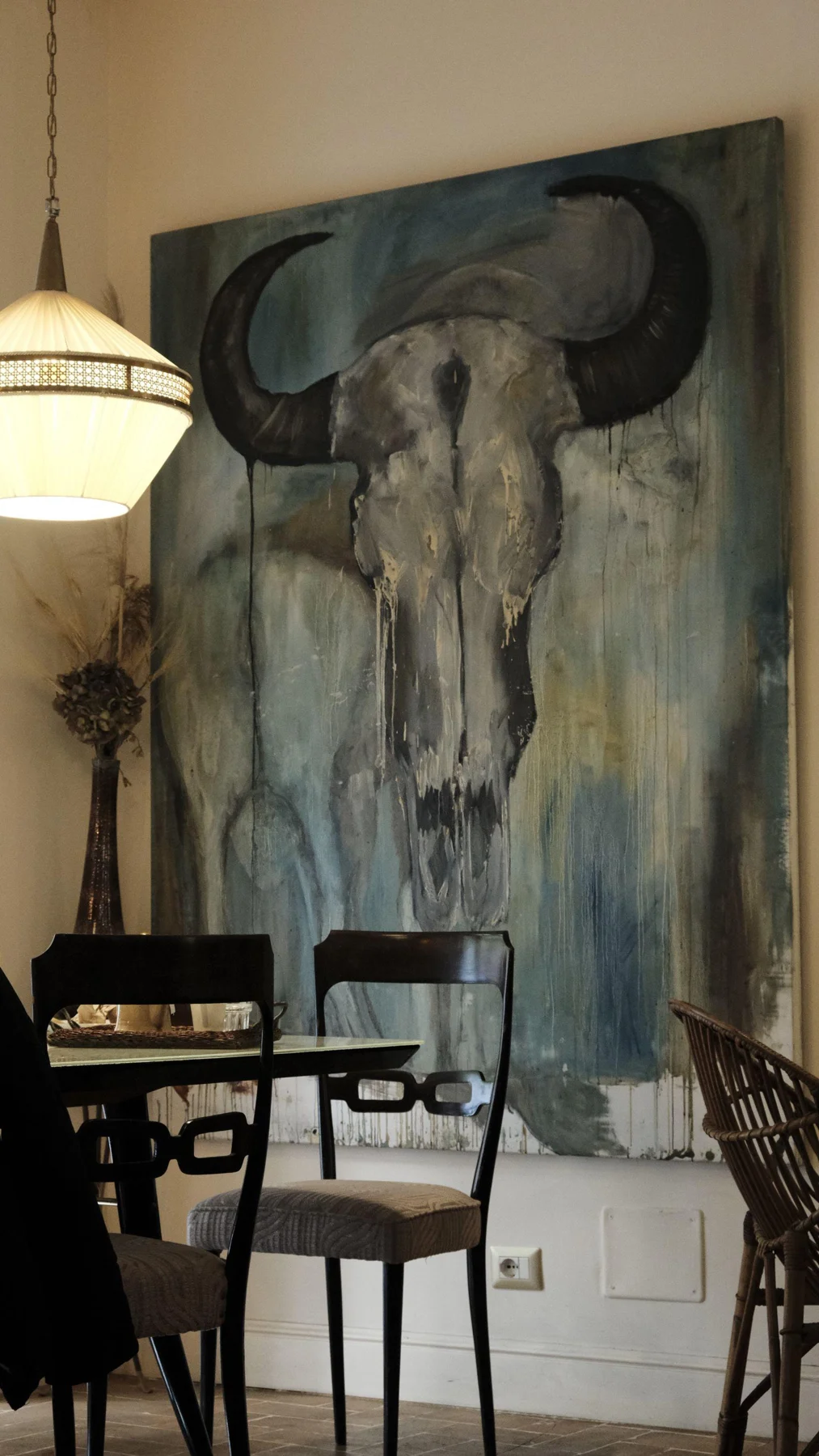
Sit in the usual seats and look toward the proposed wall. Check whether a pendant, flower arrangement, or tall chair back interrupts the view. An image that looks well placed from the doorway may be too high or partly hidden during a meal.
Broad shapes remain easy to read across the table, while smaller details can reward a closer look near a sideboard. Neither requires a literal food subject. A landscape, abstract, or drawing may suit the household better than an image chosen simply because the room contains a dining table.
Make room for everyday activity
Watch how chairs move and where bags are set down. Keep frames clear of regular bumps, splashes, and the reach of swinging doors. A shallower frame may be more comfortable beside a narrow passage, but secure fixing and the right position matter more than depth alone.
Choose a framing approach with the medium and environment in mind. Paper art needs protection from handling and moisture, and glazing should be cleaned according to its manufacturer's instructions. A valuable or irreplaceable original may be better displayed elsewhere if this wall receives frequent food splashes or direct sun.
Let the household participate
If several people use the room, make a short list of images and compare them together. Asking what each person enjoys about a picture can reveal a useful shared preference, such as warm color, recognizable places, or playful shapes. A vote among a few thoughtful choices is more useful than browsing an unlimited catalog.
Leave enough quiet around the frame for the table to change. School projects, birthday flowers, and serving dishes will add temporary color. Artwork that works only in an empty dining room is less likely to feel at home through the ordinary week.