Measure the usable strip
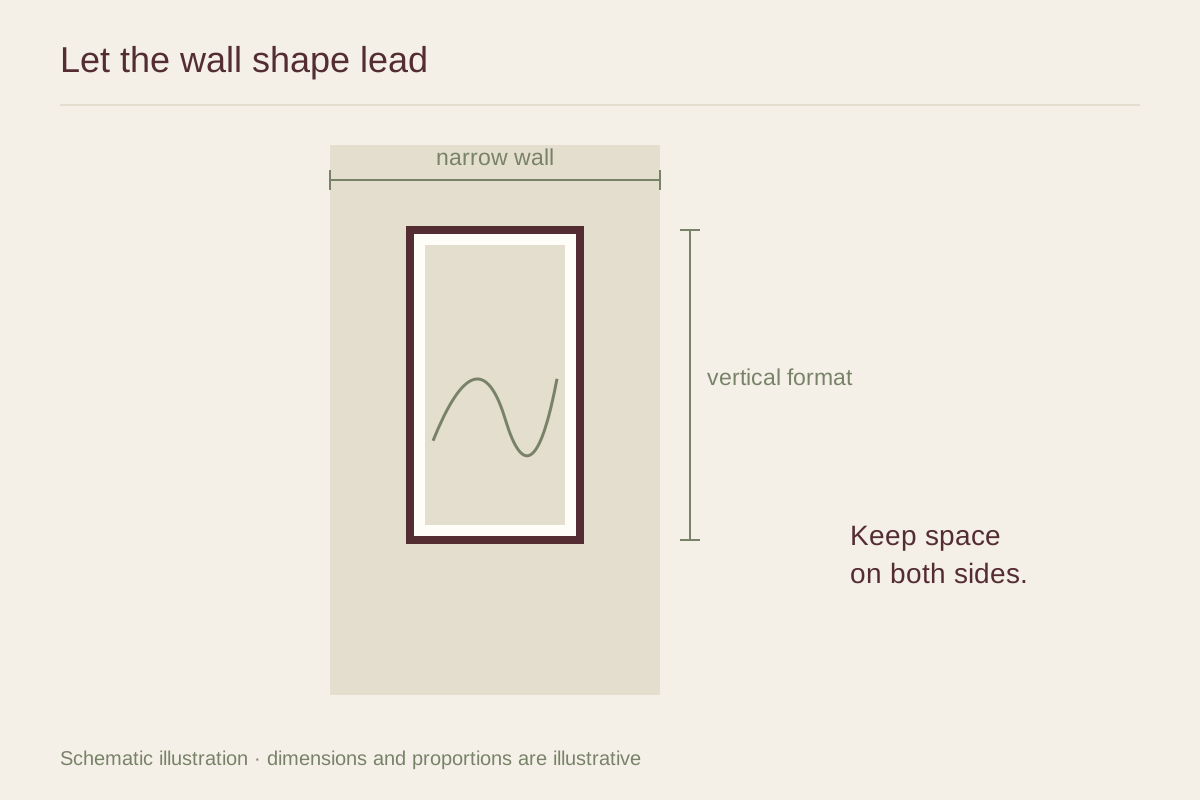
Measure the clear width at the tightest point, then sketch the full outside dimensions of a possible frame. The printed sheet size is not the finished size: a mat and frame can add several inches on each side. If a listing gives only the image dimensions, ask for the framed dimensions before ordering.
Leave some visible wall beside the frame. There is no single correct margin, but a print that almost touches both edges can look squeezed. A paper outline lets you compare a slender frame with a wider one without assuming that the largest available print will work best.
Let the subject use the height
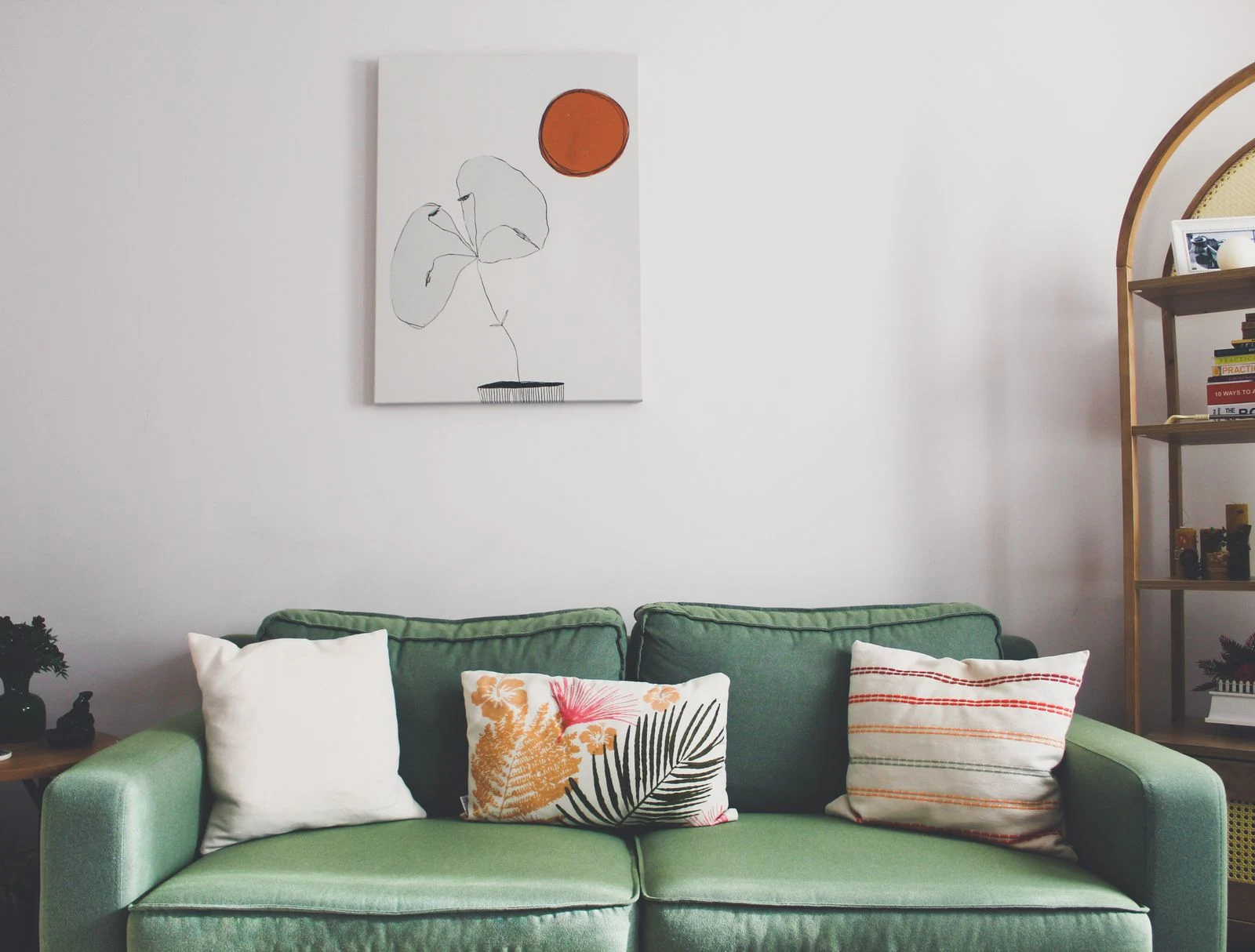
A standing figure, a long stem, a tree, or an abstract with rising forms can make use of a vertical format. A landscape cropped into a tall rectangle may work too, provided the part you enjoy remains visible. Examine the full image instead of choosing by the portrait label alone.
Think about viewing distance. Fine linework suits a small wall where people pause nearby. A wall seen across a room may benefit from a simpler silhouette or a stronger patch of color. Tall does not have to mean visually loud.
Find its place in the room
Hold the outline at a height that relates to nearby furniture and the normal view into the room. Centering it in the entire floor-to-ceiling rectangle can place it awkwardly high, especially beside a low chair or table. Check the view while seated as well as standing.
If the wall is a passage, use a frame profile that does not intrude into the route. Open the door fully and move past with a bag or laundry basket. The right choice will feel like a picture placed in a useful spot, not a thin gap filled at any cost.
Try a specific wall before choosing a format
For a 30-inch-wide strip beside a doorway, compare an 18-inch-wide outer frame with a 24-inch-wide one. The first leaves 6 inches of wall on each side if centered; the second leaves 3. Those numbers are not a prescription, but they reveal why a seemingly modest size increase changes the feeling of the space.
Now add the door casing and the picture's actual dark or light areas to your judgment. If the wider version feels crowded, a smaller sheet with a suitable frame may be preferable to cropping away part of the image merely to make it taller.