Identify the product itself
Confirm the title, artist attribution, and medium. Distinguish the original artwork from the reproduction being offered. A listing might describe a painting in its introduction while selling a paper print of that painting. The words used for the actual item should make that distinction clear.
Check whether you are buying a physical print or a downloadable file. A digital download may require you to arrange printing and may include usage restrictions. A physical print should specify its paper or other substrate and the available size choices. Do not rely on the product category alone.
Read all the dimensions
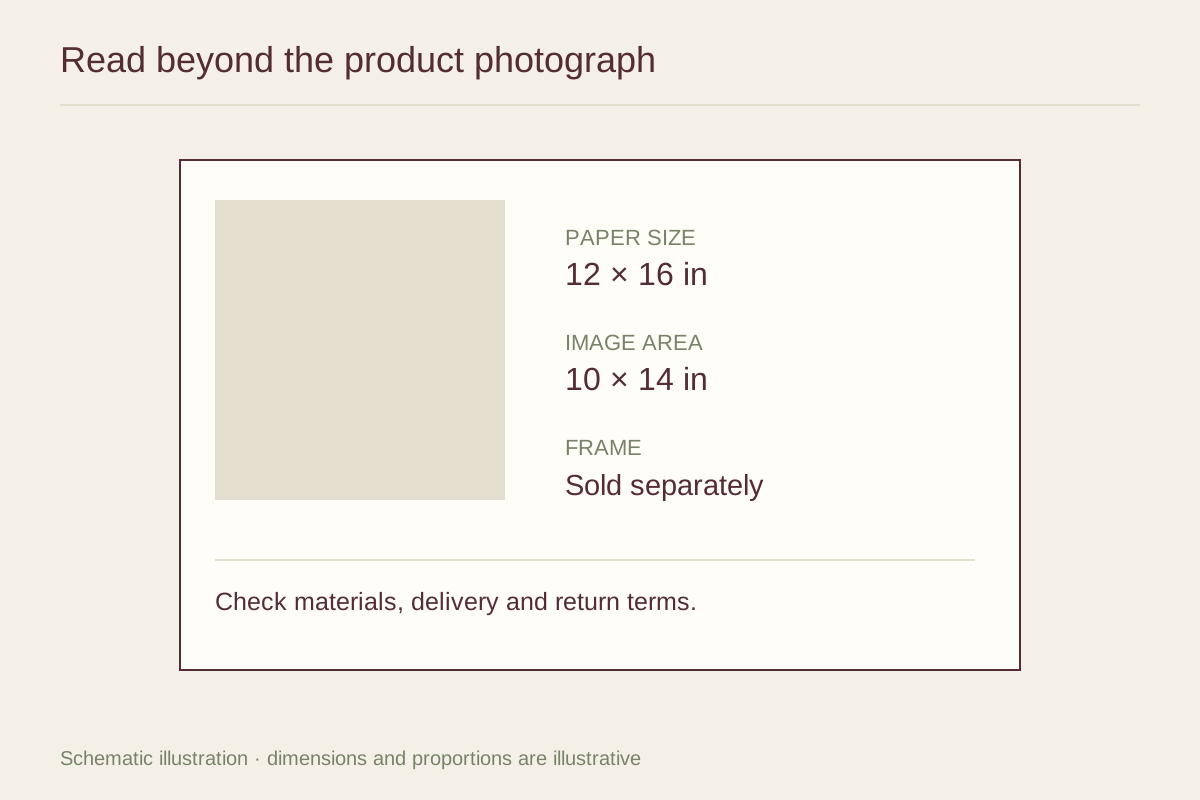
Find the image dimensions, sheet dimensions, and framed outside dimensions if applicable. A white border can be included within the advertised size or added beyond it. A mat can change the visible image area, while the frame changes the overall space required on the wall.
Check the aspect ratio for the selected size. If the listing offers several ratios, ask whether the image is cropped or surrounded by different borders. Look closely at the edges of the preview and identify any detail you would be disappointed to lose.
For a framed order, ask about depth and total weight as well as width and height. Those measurements affect the hanging method, carrying route, and suitability for narrow passages. A visually slim frame may still hold heavy glazing.
Confirm materials and finish
Read the paper description, printing process, and surface finish. Terms such as premium or gallery quality are not substitutes for a material description. If longevity or a particular texture matters, ask for the specific paper and ink information the seller can actually provide.
For framing, confirm the frame material and finish, mat color, glazing type, backing, and supplied hanging fittings. Ask which options are shown in the main photograph. A metallic-looking frame may be painted wood, and an image presented behind a mat may be sold without one.
Check edition and condition claims
If the print is described as signed or limited, ask how the signature is applied and what the edition total covers. Different sizes or colorways may belong to separate editions. Keep the seller's explanation with the purchase record rather than assuming every version of the image shares one limit.
For older or previously framed work, request condition photographs of the actual item. Look for information about fading, creases, foxing, repairs, trimming, and mounting. Do not attempt to diagnose every mark from a screen, but ask direct questions about any area the photographs leave unclear.
Read the journey and the exit
Confirm dispatch timing, shipping method, packaging, and who handles a damaged delivery. If the product is made to order, separate production time from transit time. Check whether import charges or other fees may apply to your destination before comparing the total with a domestic option.
Read the return policy for the exact variant you selected. Custom framing, personalized work, and downloadable files may have different terms. Save a copy of the listing and the written answers to your questions. A clear record helps both you and the seller resolve a mismatch without relying on memory.
Finally, review the cart itself. Verify size, orientation, border, frame, quantity, shipping address, and total price. The most carefully researched choice can still be undermined by a default option that changed when you selected a different size.