Define the usual arrangement
Place the objects that normally live on the sideboard before testing art. A lamp at one end can make an offset picture or unequal pair feel more balanced than a centered work. If the top is usually clear, a single centered image can give the whole wall a calm structure.
Measure the complete frame size and compare it with the sideboard's visual weight. A slim cabinet on legs and a deep solid cabinet support different impressions. Use a full-size outline rather than assuming every sideboard needs art that occupies the same fraction of its width.
Leave a useful serving zone
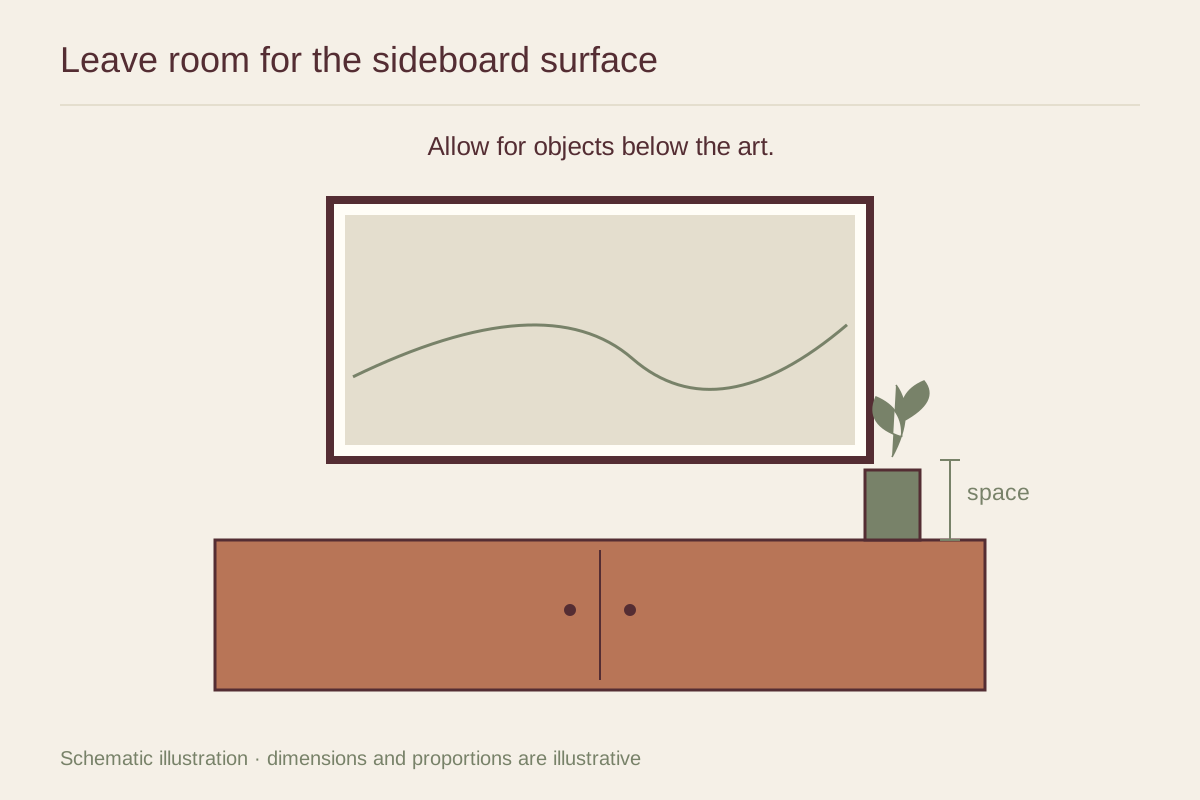
Keep the lower frame edge clear of routine handling and tall objects used during meals. A picture should not be at risk whenever a serving platter is set down. If occasional large flowers cover it, you can move the flowers for that event instead of hanging the artwork permanently too high.
Look at the wall from the dining seats. People may spend more time with the picture from that lower position than while standing in front of the sideboard. Check whether a pendant or centerpiece blocks the main part of the image.
Make the art and objects cooperate
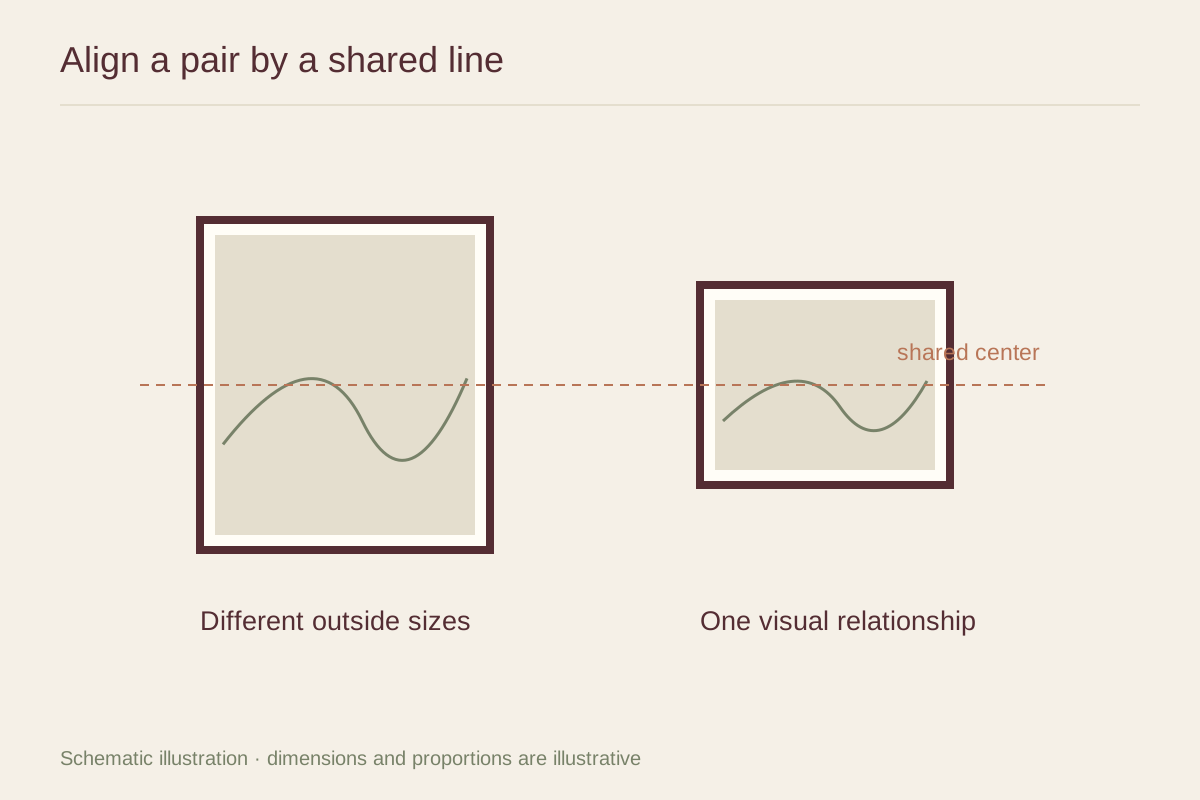
A broad landscape can echo the sideboard's long shape, while a pair of vertical prints can add a different rhythm. If the cabinet has decorative doors or strong grain, an image with open areas may provide a useful pause. Let one part of the wall carry the most detail.
Avoid liquids and heat sources close to the artwork. Candles and frequently watered plants can introduce soot, heat, or spills. Choose a display that remains workable during a meal, then edit accessories after the picture is in place. The sideboard does not need a row of decorative objects to justify the artwork above it.