Choose the visual center
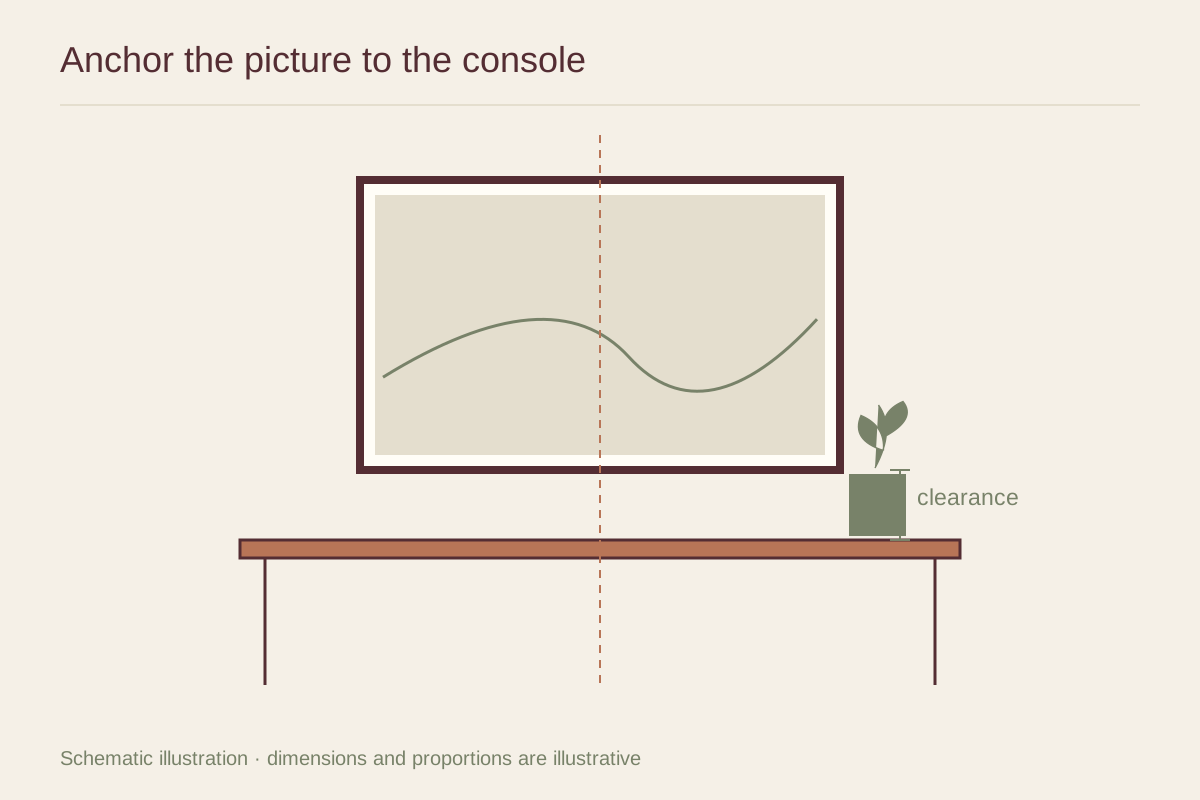
A single centered picture can feel calm above a symmetrical console. If a lamp occupies one end, an offset image or a pair may create a better balance. Test the full arrangement rather than centering the art by default and compensating with more accessories.
Use a paper outline of the complete frame. A console with slender legs may feel overwhelmed by a heavy frame nearly as wide as the tabletop, while a substantial cabinet can support a stronger visual presence. Compare the shapes in the room instead of relying on a fixed width ratio.
Set the height around actual objects
Place the lamp, tray, and other everyday items before deciding the artwork's lower edge. Keep important image details clear of the lampshade and tall objects. A little overlap can add depth, but it should not hide the reason you chose the picture.
Look from the entrance and from nearby seats. Hanging art too high to clear one unusually tall vase can disconnect it from the table during the rest of the year. It may be better to move the vase or accept that it is an occasional object used elsewhere.
Decide between hanging and leaning
A leaning frame requires a stable surface and a suitable means of preventing sliding or tipping. Do not assume its weight alone makes it secure. In an entryway, around children or pets, or on a narrow console, a properly hung frame may be the more dependable arrangement.
Check reflections from the lamp and any nearby window before final installation. Keep access to outlets and switches clear, and confirm the hardware suits the wall and full frame weight. Once the main image works, add only the tabletop objects that have a purpose; the artwork does not need a supporting cast of decorative items.
Compare a lamp-led arrangement
If a tall lamp occupies the console's left end, try a picture shifted slightly right, with the lamp overlapping only a quiet part of the frame area. Then compare a fully centered picture with the lamp moved farther out. Keep the same artwork in both tests so you are judging arrangement rather than changing subjects.
A small tray on the opposite side may be sufficient; it does not need to equal the lamp's height. Visual balance can come from different objects serving different roles. If the arrangement requires a precarious stack to feel balanced, reconsider the picture position.