Document the old arrangement
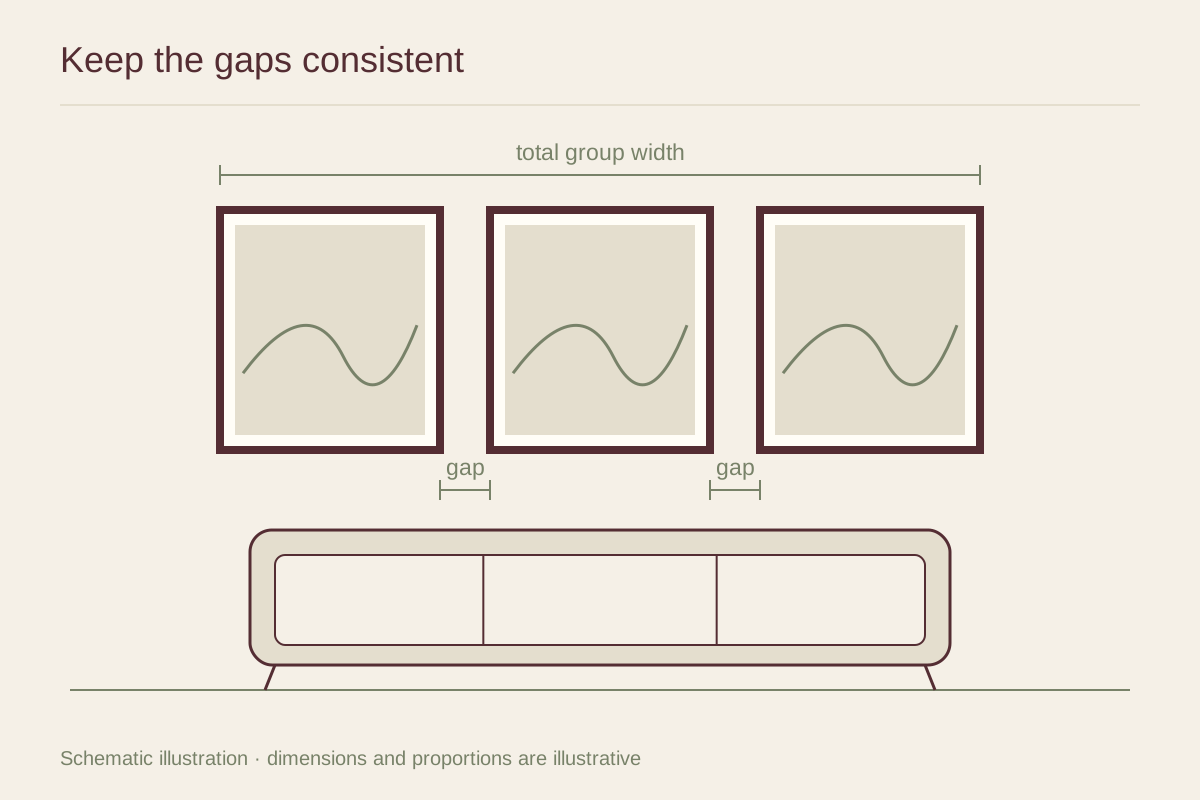
Before taking frames down, photograph the wall straight on and record the overall width, height, and main gaps. Number the frames and make a simple key that connects each number with its image. Keep labels on frame backs away from the artwork and any important existing marks.
Record outside dimensions, depth, complete weight, and hanging hardware for each frame. Note any loose corners, damaged fittings, or glazing issues that need attention. A move is a good time to have a questionable frame repaired rather than carrying the same problem into a fresh installation.
Transport the objects as frames, not a stack
Use suitable protective materials and keep frame faces from rubbing against each other. Protect corners and avoid putting pressure on glazing. Follow the framer's handling advice for large or fragile works, and arrange enough help to carry awkward objects through doors and stairs.
Do not use the picture wire as a carrying handle. Support the frame in a way appropriate to its construction. Keep artwork away from damp, heat, and prolonged direct sun during the move, and avoid leaving important works in a vehicle while other tasks are completed.
Measure the new room independently
Sketch the new wall with furniture, doors, lights, switches, vents, and curtain space. Identify the main viewing position. A group that was seen from across a living room may now be encountered closely in a hallway, which can change both spacing and the most useful image order.
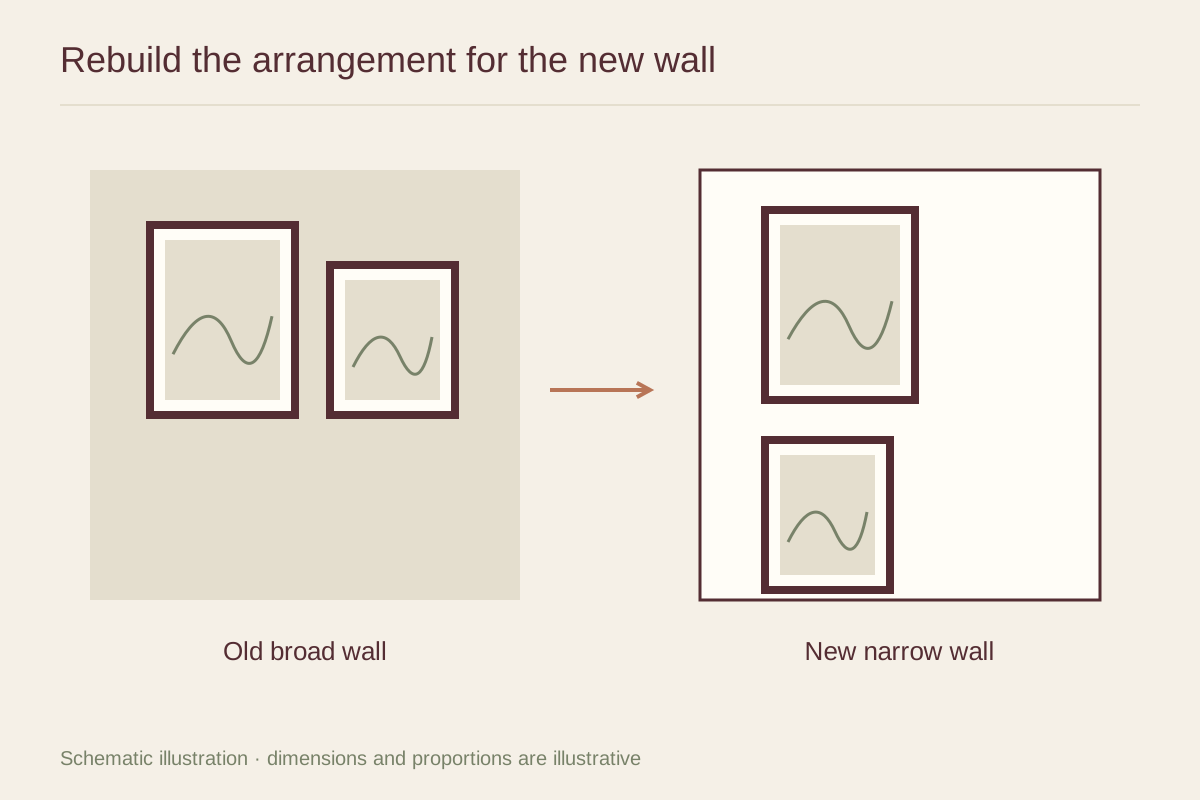
Compare the collection's overall size with the available area. Do not preserve every old gap if doing so crowds the new wall. You can split the collection into two groups, rotate some works into storage, or choose a smaller core display. Keeping all the pictures does not require hanging all of them together.
Rebuild the visual hierarchy
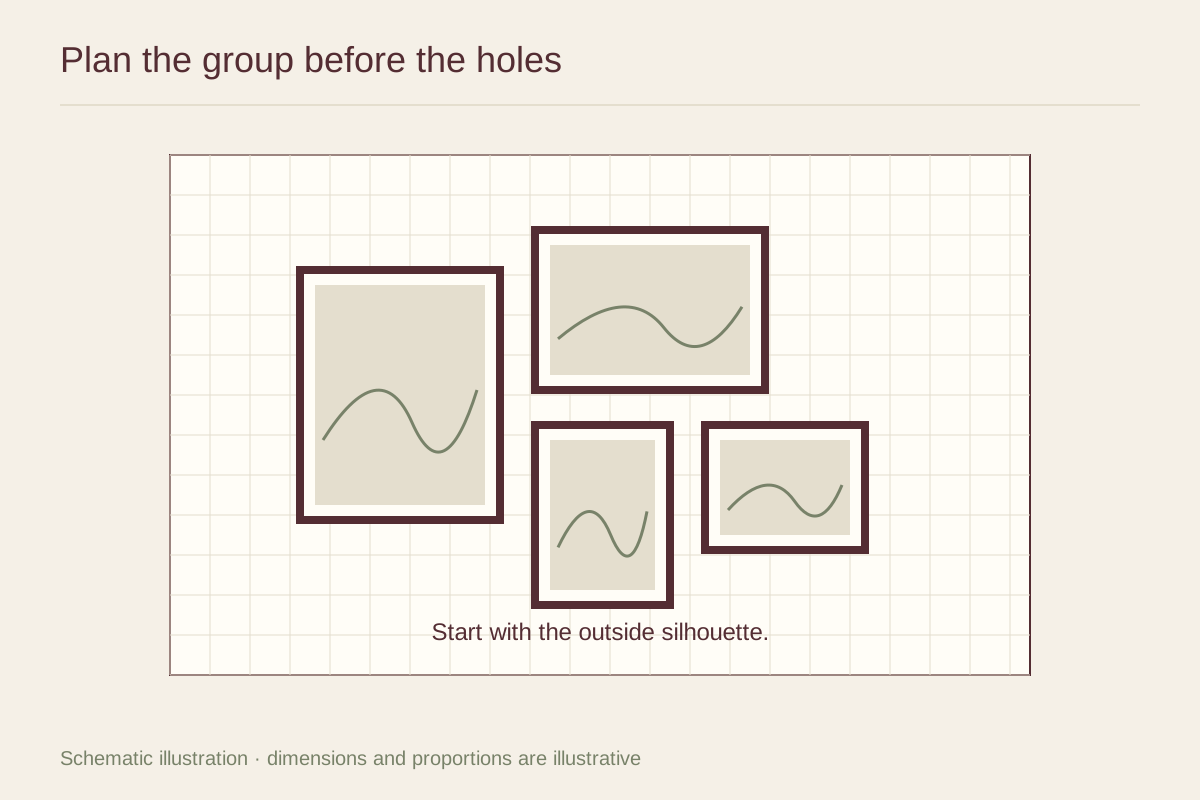
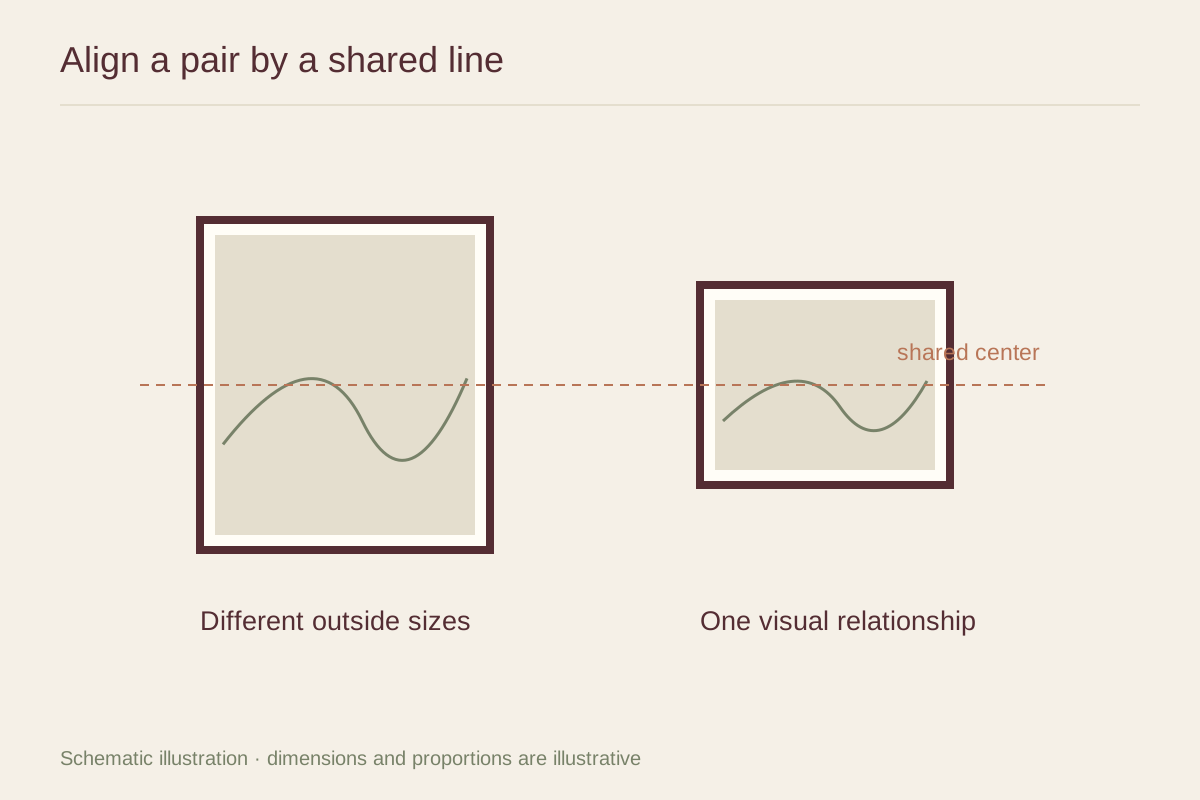
Start with the work you want to anchor the new room. It may be different from the old anchor because the furniture, light, and wall color have changed. Add the next strongest images, then see which smaller pieces improve the arrangement rather than merely filling space.
Use full-size templates and compare the old layout with at least one revised option. Check the view while seated and while entering the room. A frame that formerly looked quiet may become prominent against a darker wall, and a once-vivid print may lose detail in a dimmer location.
Consider whether a frame or mat change would help a particular work, but do not reframe the entire collection just to make it uniform. Mixed frames may be part of its character. A small adjustment to one outlier can be enough.
Treat the installation as new
Reassess the wall construction and select appropriate fixings for each frame's complete weight. Old anchors and removed adhesive strips should not be reused unless their manufacturer expressly permits it. The old wall's hardware choice is not evidence that the same product suits the new wall.
Measure each frame's actual hanging points again after transport, especially if fittings were adjusted or repaired. Keep the new layout and hardware notes with the earlier record. You will then have a useful history of the collection without being tied to an arrangement made for a room you no longer use.