Build a complete first group
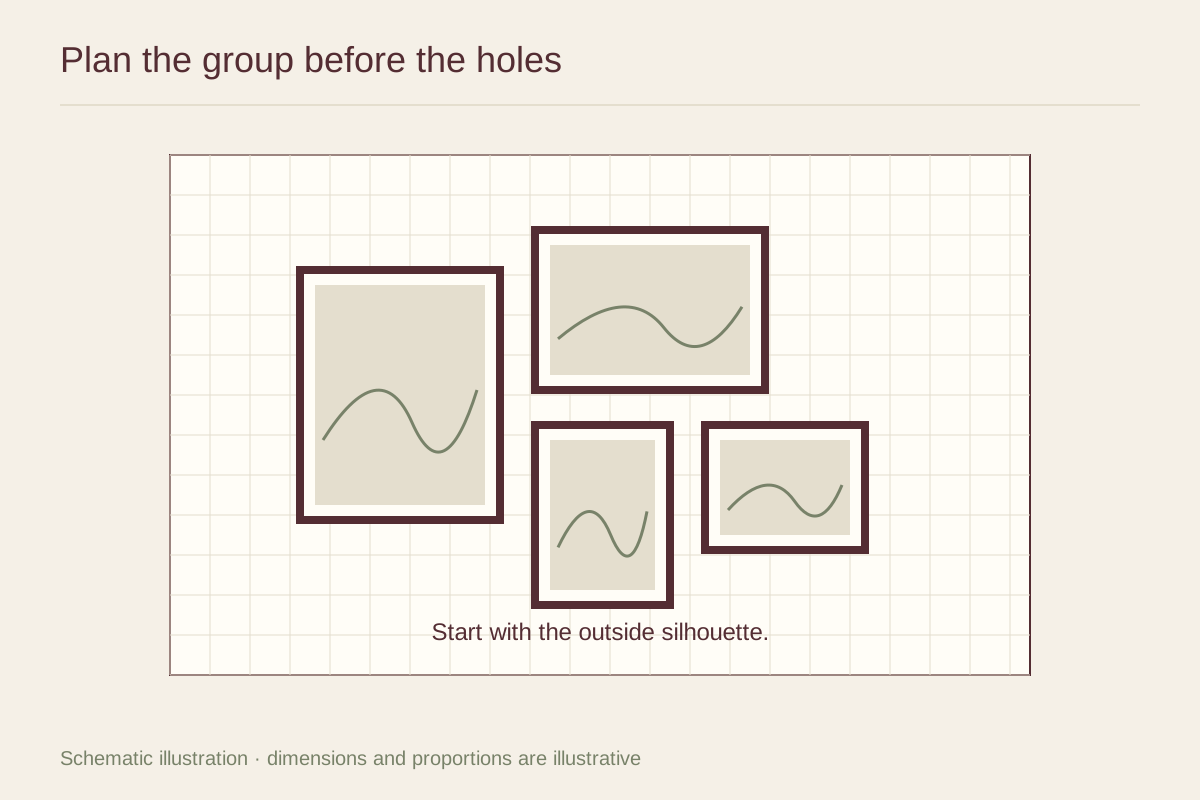
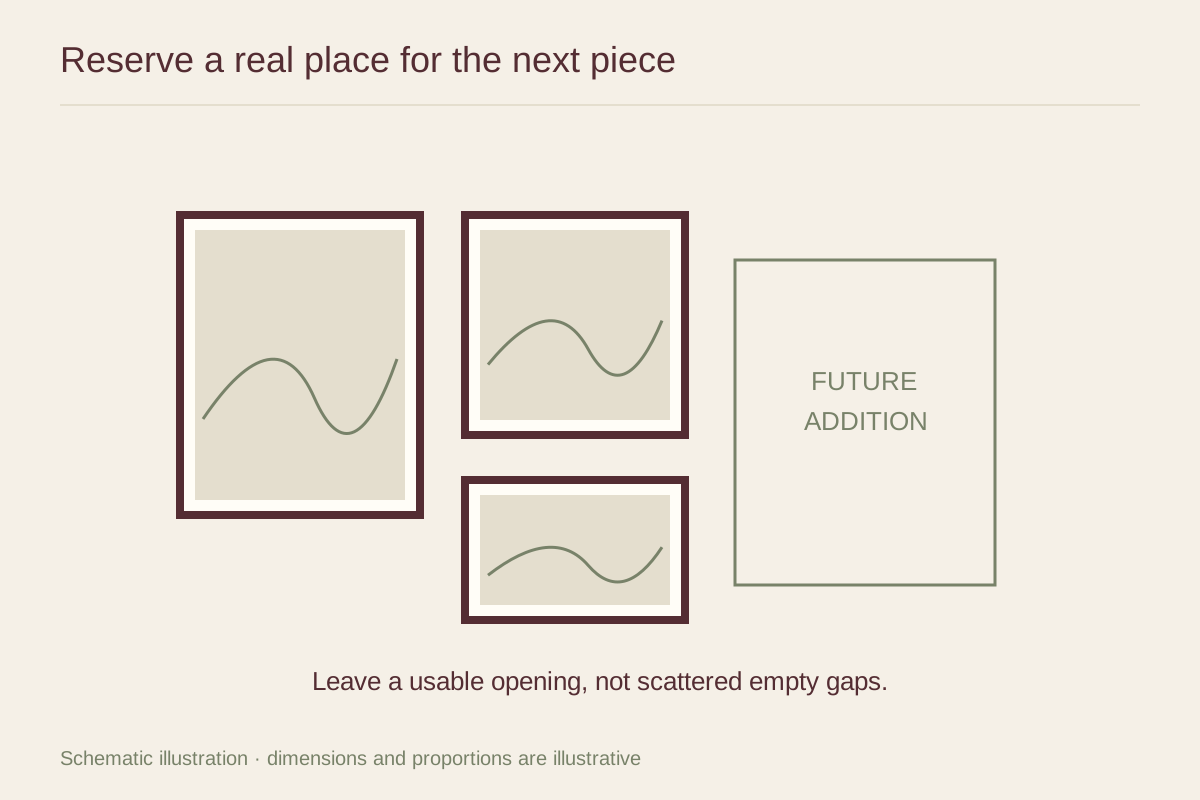
Start with the works you own and give them a clear outer shape. A compact cluster or a short row can stand alone. Leave open wall beyond one or two edges rather than creating holes between pictures that depend on unknown future dimensions.
Choose the likely direction of growth. A wall above a sofa may have more room sideways than upward, while a tall narrow area may expand vertically. Account for switches, lights, curtains, and the furniture's full use before reserving that space.
Keep one flexible rule
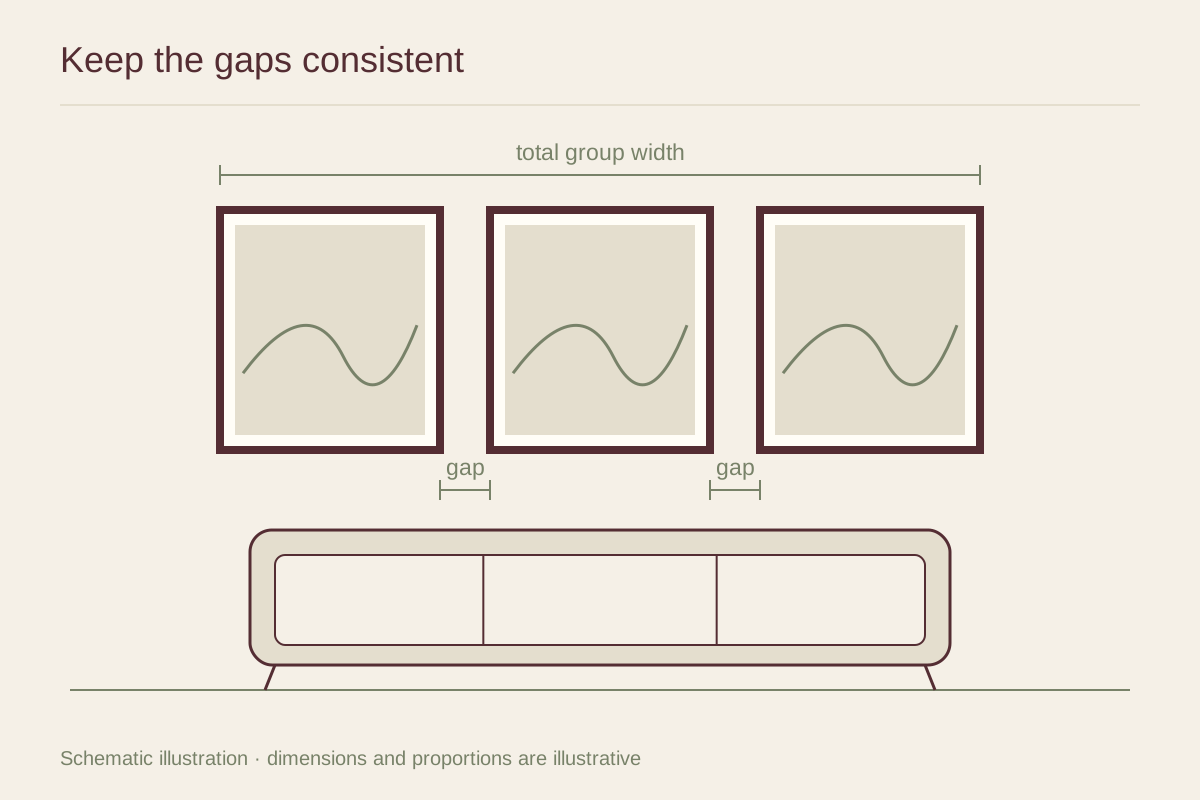
A repeated frame finish or a general gap range can help future additions belong without requiring exact matching products. If every frame must be identical, confirm that you can obtain more or buy a modest spare only if you have a real use for it.
Avoid choosing an extremely precise grid if the collection will grow unpredictably. Adding one frame to a six-frame grid can require a full redesign. A looser grouping with a clear anchor may absorb a new size more easily.
Record the existing arrangement
Keep a straight-on photograph, the outside dimensions of each frame, and the overall group measurements. Label the frames on the back with removable identification placed away from the artwork. This makes it easier to test future layouts without repeatedly taking everything down.
When adding a work, consider replacing or rotating an existing piece as well as expanding. A collection can grow without every object being displayed at once. Rotation may preserve the room's balance better than filling the remaining wall.
Reassess after each addition
Check the main viewpoint, the gaps, and the distribution of dark and bright areas. A small new image can have a large effect if it contains intense color. Verify its weight and hardware independently. The wall should evolve through complete, considered arrangements rather than become a record of every available nail.