Work with the usable wall
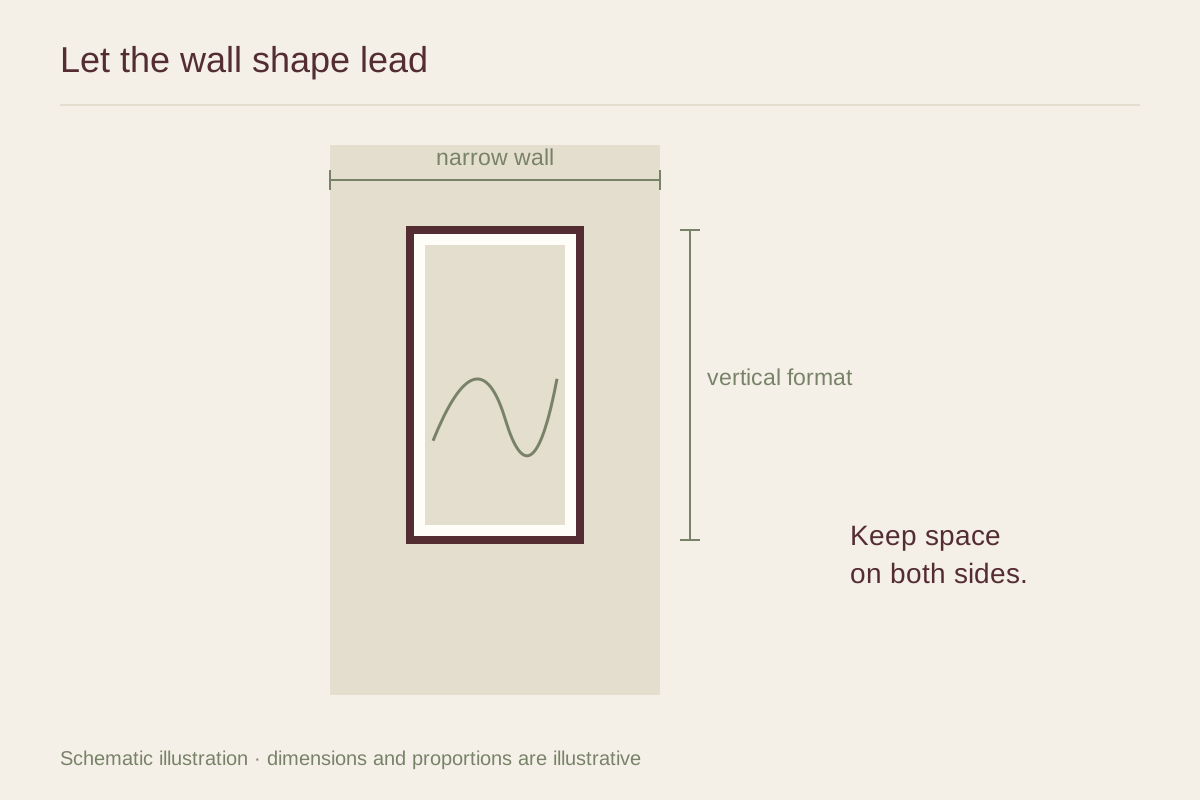
Measure the area between the furniture and ceiling rather than selecting a print from the wall's full height. A tall headboard, high-backed sofa, or deep cornice can leave less space than expected. Include the frame and mat in the measurement, then test the outline on the wall.
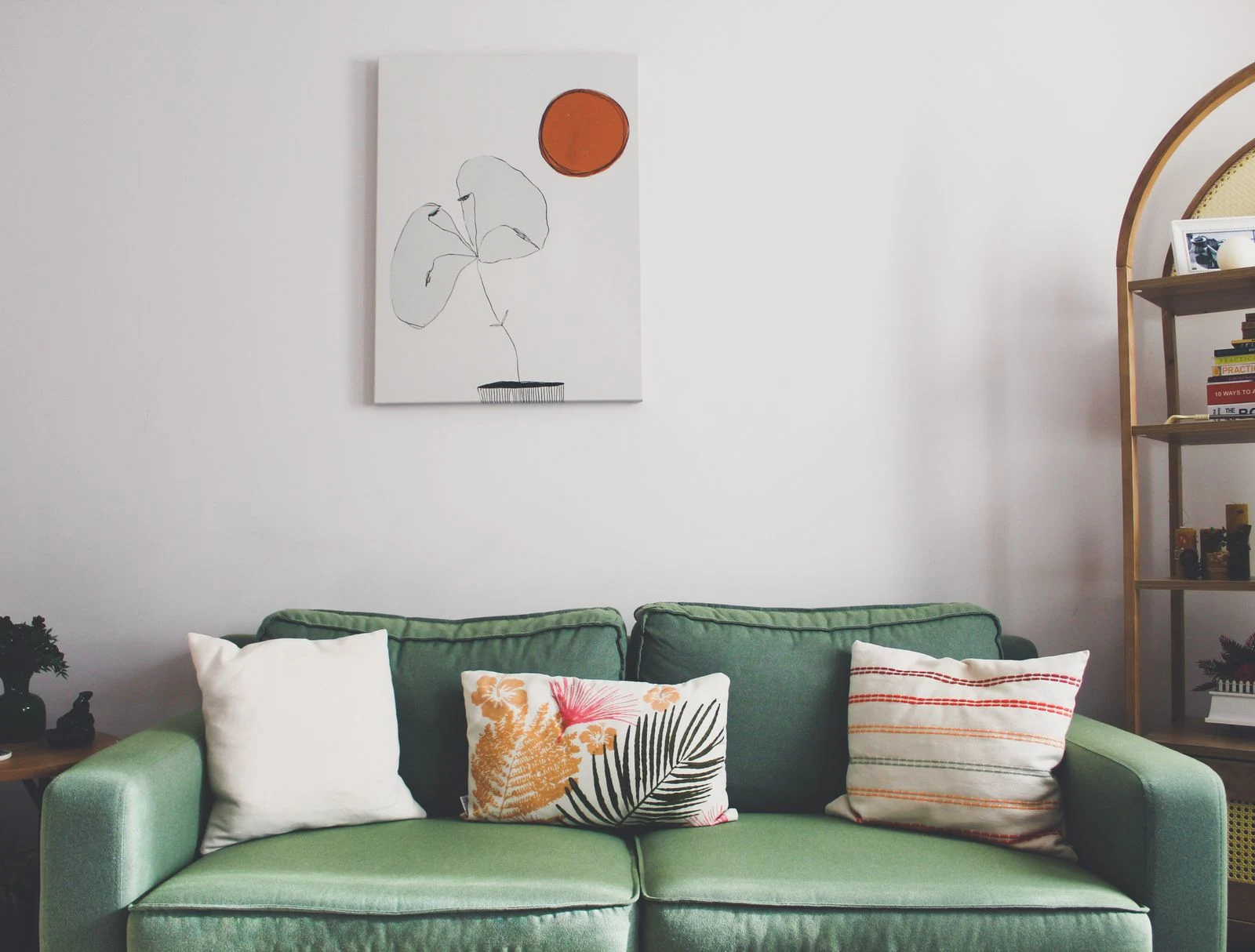
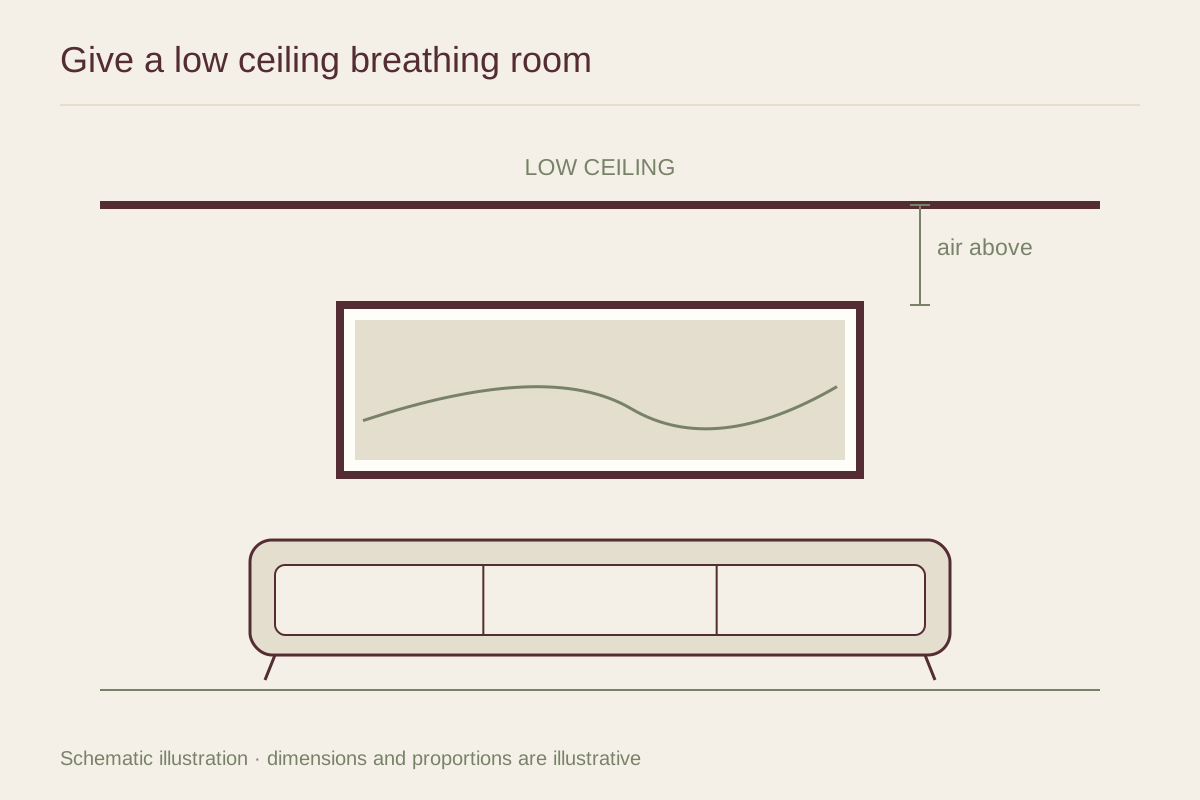
A vertical print can introduce an upward movement, but a large vertical frame squeezed against the ceiling may emphasize the lack of height. A smaller vertical work with open wall above it can feel more comfortable. A horizontal picture can also work when it relates well to a long, low piece of furniture.
Keep the edges deliberate
Avoid hanging the picture high simply to make the room feel taller. From a seated position, that often disconnects the art from the furniture and places it uncomfortably near the ceiling. Try the template at a lower position and judge the whole wall, including the empty area above it.
A thin frame or a mat close in color to the wall can keep the boundary light. That is an option, not a rule: a dark frame may be exactly what a pale, spare room needs. The important question is whether the edge clarifies the image or creates another heavy horizontal band.
Edit the surroundings
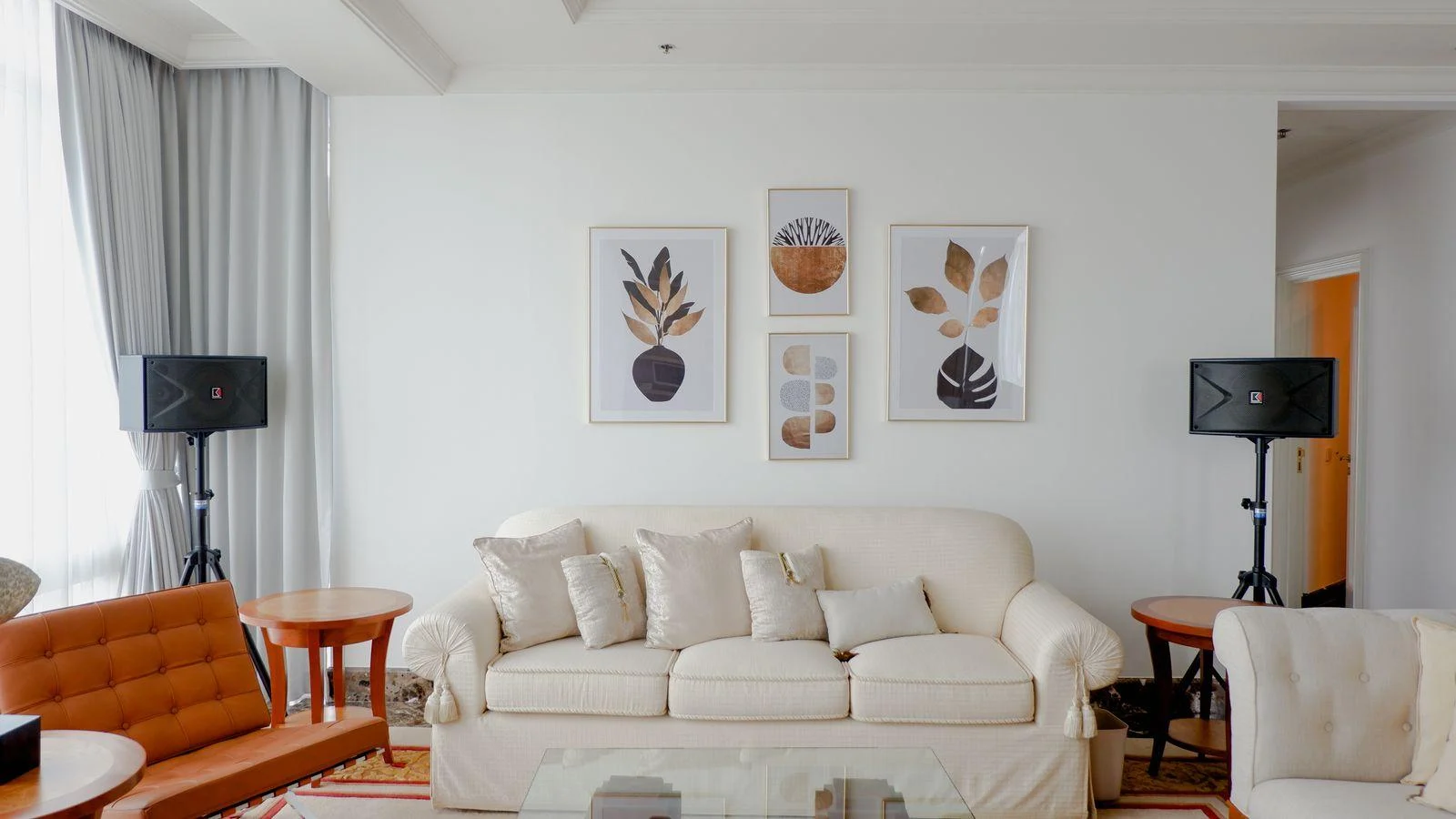
Look at lamps, shelving, curtain rods, and art together. If several objects terminate at almost the same height, the room may acquire a strong visual line below the ceiling. Moving or removing one element can loosen that effect without changing the artwork.
Keep a photograph of the paper mockup and compare it with the room in person. Wide-angle phone images can exaggerate space, so trust the actual seated and standing views. Choose the print that feels right at those views instead of relying on a promise that one orientation always makes a room taller.
Compare the top gap, not just the center
Two frames can share the same center height yet leave very different amounts of wall above them. A tall frame may nearly meet the ceiling while a horizontal frame leaves a broad open band. Mark both outer shapes on paper and inspect that upper space from the main seat.
If a tall print is the one you love, a smaller version may preserve its vertical character without crowding the ceiling. Avoid replacing an image you prefer with an unrelated horizontal picture simply because a rule claims that low rooms demand one orientation.