Describe what you respond to
Each person can choose three images and explain one specific quality they enjoy in each. Focus on color, subject, line, texture, or emotional association. Words such as modern and traditional are broad enough to conceal more agreement than they reveal.
Also name a few genuine dislikes. A person may be comfortable with abstraction but dislike hard geometric edges, or enjoy landscapes while avoiding dramatic sunsets. These distinctions produce a more useful search than treating styles as opposing camps.
Agree on the room's requirements
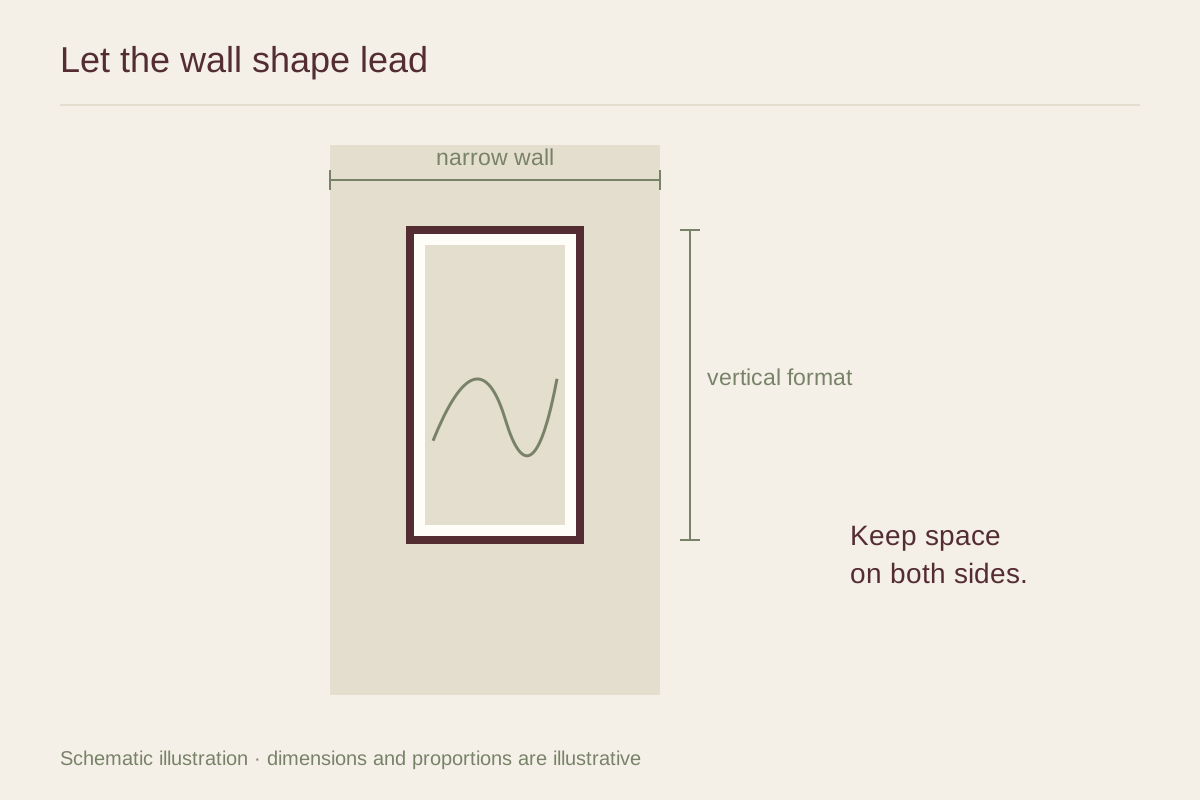
Set a shared budget that includes framing and installation. Measure the available wall and identify the normal viewing distance. Decide whether the picture should be quiet or assertive in that setting. These practical limits reduce the field without asking either person to surrender a preference.
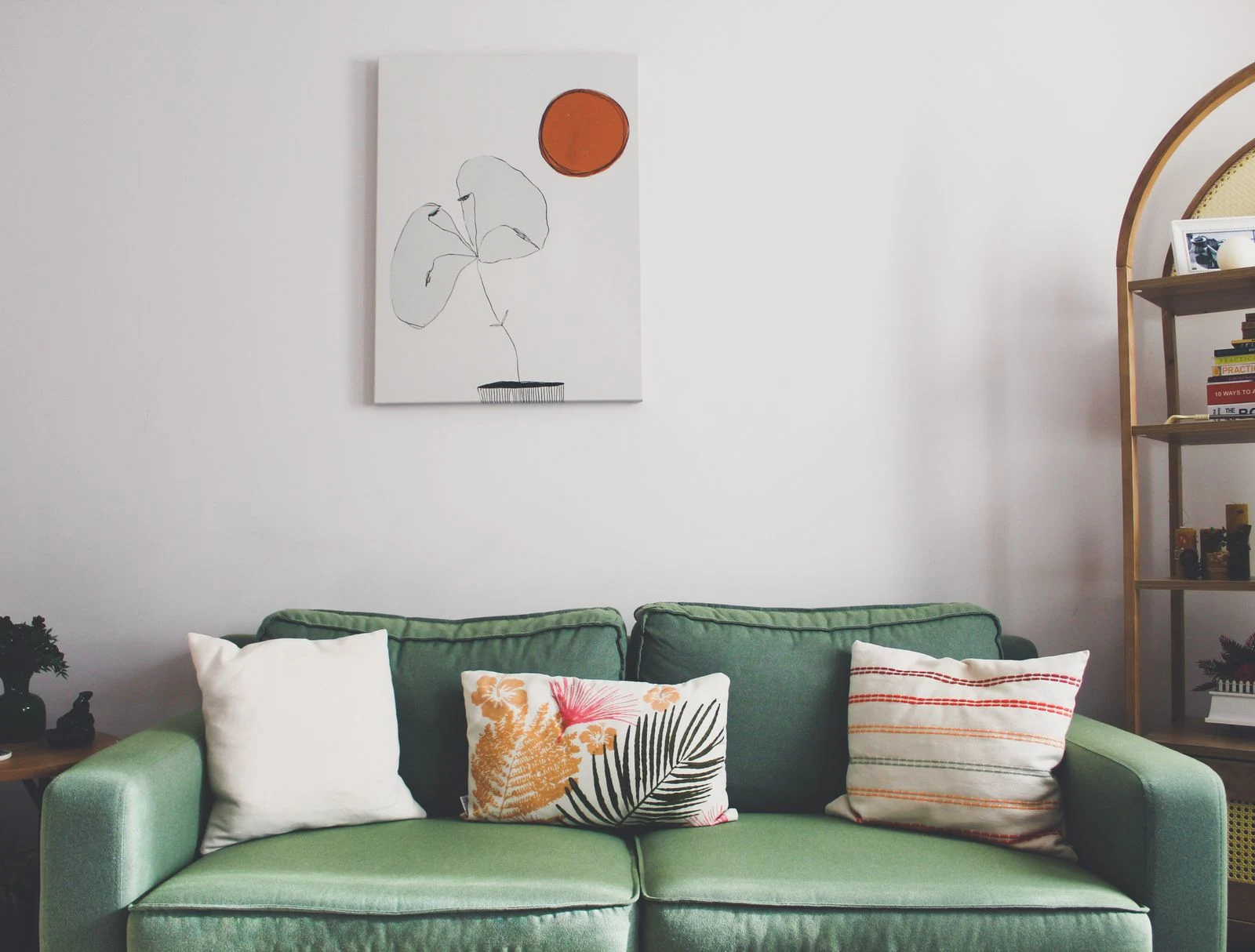
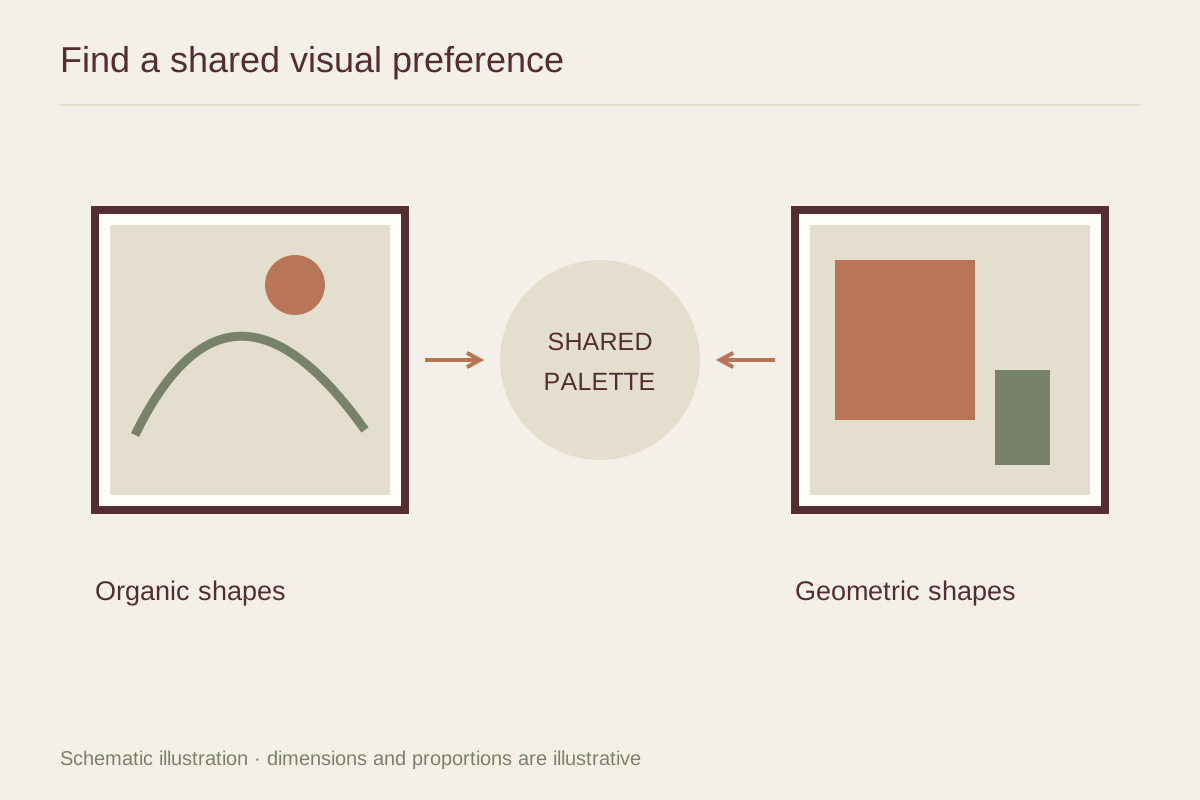
Look for a bridge rather than a diluted compromise. A loosely painted landscape, a photograph with strong abstract shapes, or a figurative drawing with generous blank space may offer qualities both people value. The goal is a work each person can name a reason to enjoy.
Use a short comparison period
Choose a small shortlist and view the images at a similar size. Leave them available for a few days, then compare reactions again. An immediate favorite may lose interest, while a quieter image may become more appealing as its details become familiar.
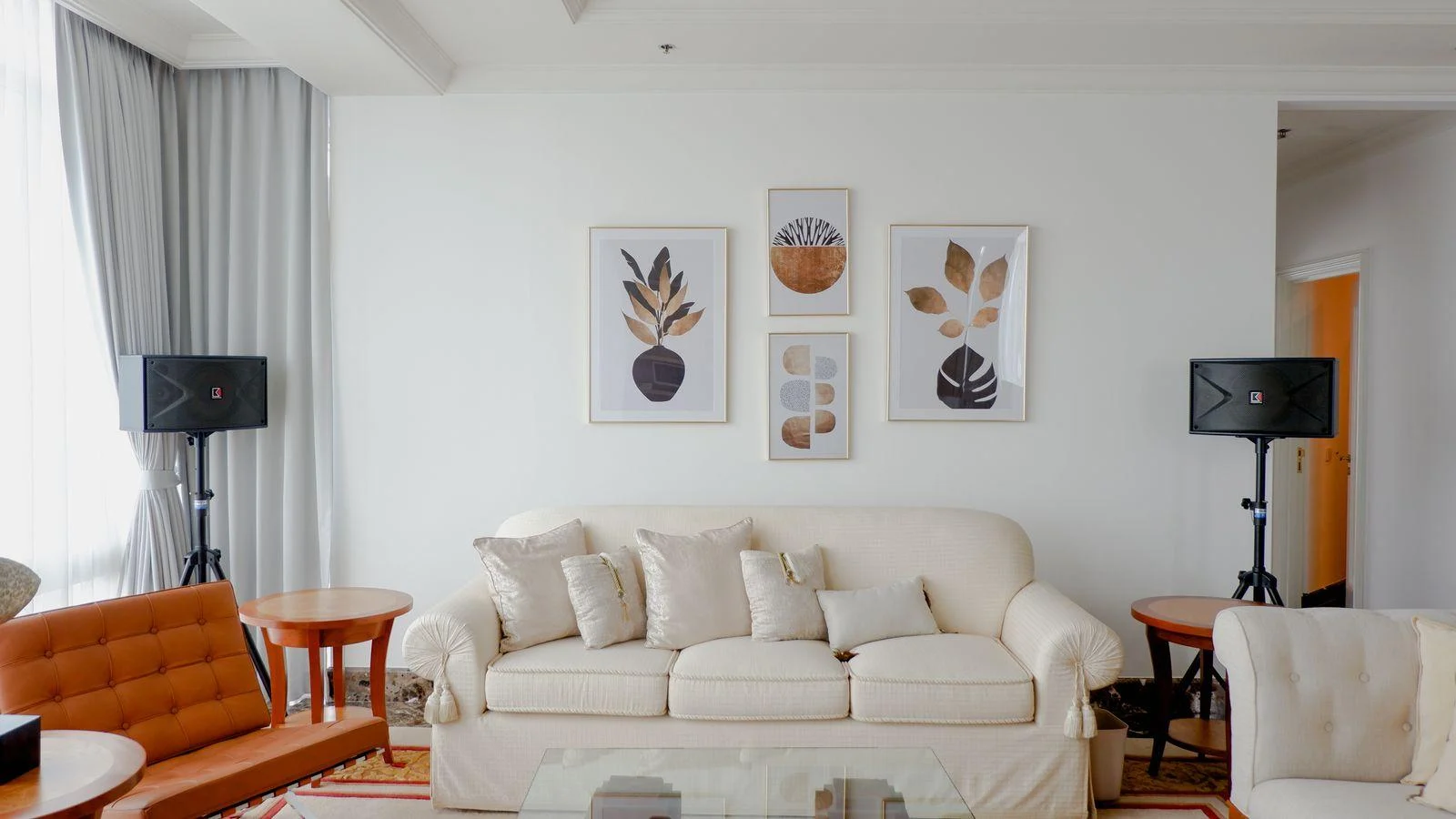
If no single work earns a shared yes, consider a pair or different walls with a common frame or color connection. That can preserve distinct tastes without making every object a compromise. A shared room does not require identical preferences, only a display that both people are comfortable living with.
Give each choice a fair trial
Compare candidates in the same format and size, with the same amount of border. A dramatic room mockup can make one person's choice look more persuasive than a plain thumbnail of the other's. Print small references or place them in identical digital rectangles before discussing them.
Agree on the decision rule before the final comparison. For a shared focal wall, requiring two positive responses can prevent a reluctant purchase. Separate personal spaces can follow a different rule. This keeps the conversation about how the room is shared rather than about whose taste is more sophisticated.