Read the fixture's requirements
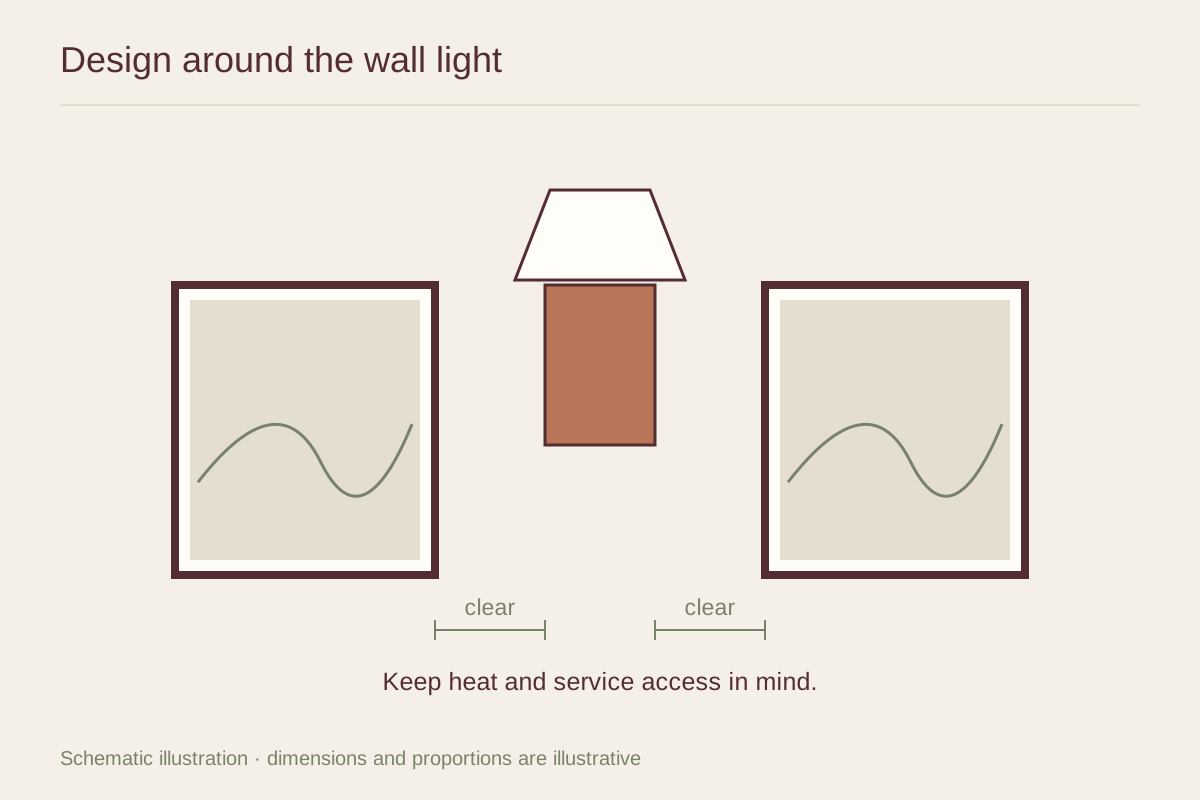
Check the manufacturer's guidance for clearances, bulb type, and access. Keep artwork away from hot components and leave room for maintenance. A lamp's appearance does not tell you how much heat it produces or whether a nearby frame is suitable.
Do not cover switches, wiring access, or the fixture's mounting area with a frame. If installation requires drilling near electrical services and their location is uncertain, have a qualified person assess the wall. A symmetrical arrangement is not worth guessing where concealed wiring runs.
Test the light on the image
Turn the fixture on and hold a sample or template in the proposed position. Look for glare on glazing, a bright patch that obscures detail, and hard shadows from a deep frame. Check from the actual seat or walking route rather than only from directly in front.
Paper and photographs are sensitive to light exposure, so avoid treating a bright wall lamp as harmless simply because it is indoors. A lower-intensity setting, shorter use, or another placement may be more suitable for a vulnerable work. Ask a framer or conservator about important originals.
Choose symmetry or a deliberate offset
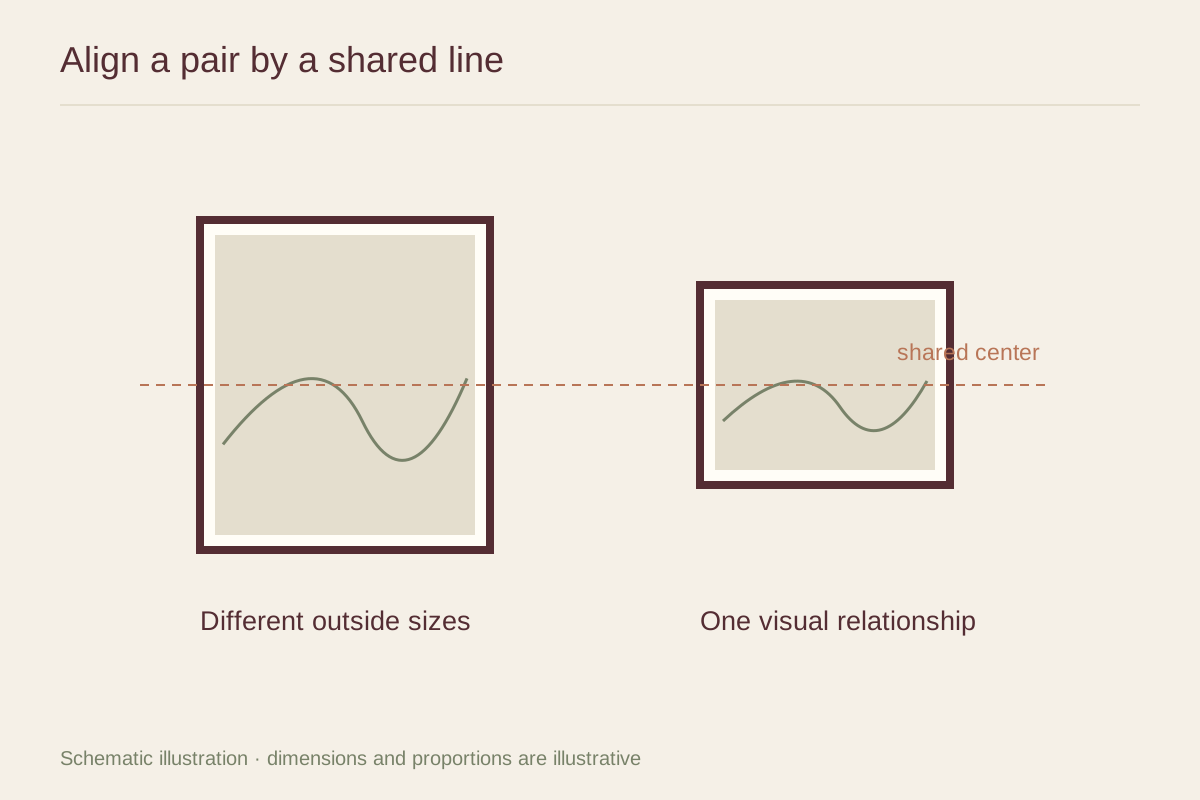
A picture centered between two lights can feel formal and settled. A single light beside a work can create an asymmetrical composition. Use full-size outlines to see whether the fixture and frame have enough breathing room and whether their centers need to align visually.
If the fixture sits at a height intended for reading, do not move the artwork into an awkward position solely to match it. The lamp's task and the picture's viewing height may be different. A clear offset often looks better than near alignment that appears accidental.
Check the wall with the light off
The fixture still shapes the composition during the day. Confirm that the frame, lamp, and furniture feel balanced without the pool of light. A successful arrangement works as a group of objects and remains readable when the lighting condition changes.