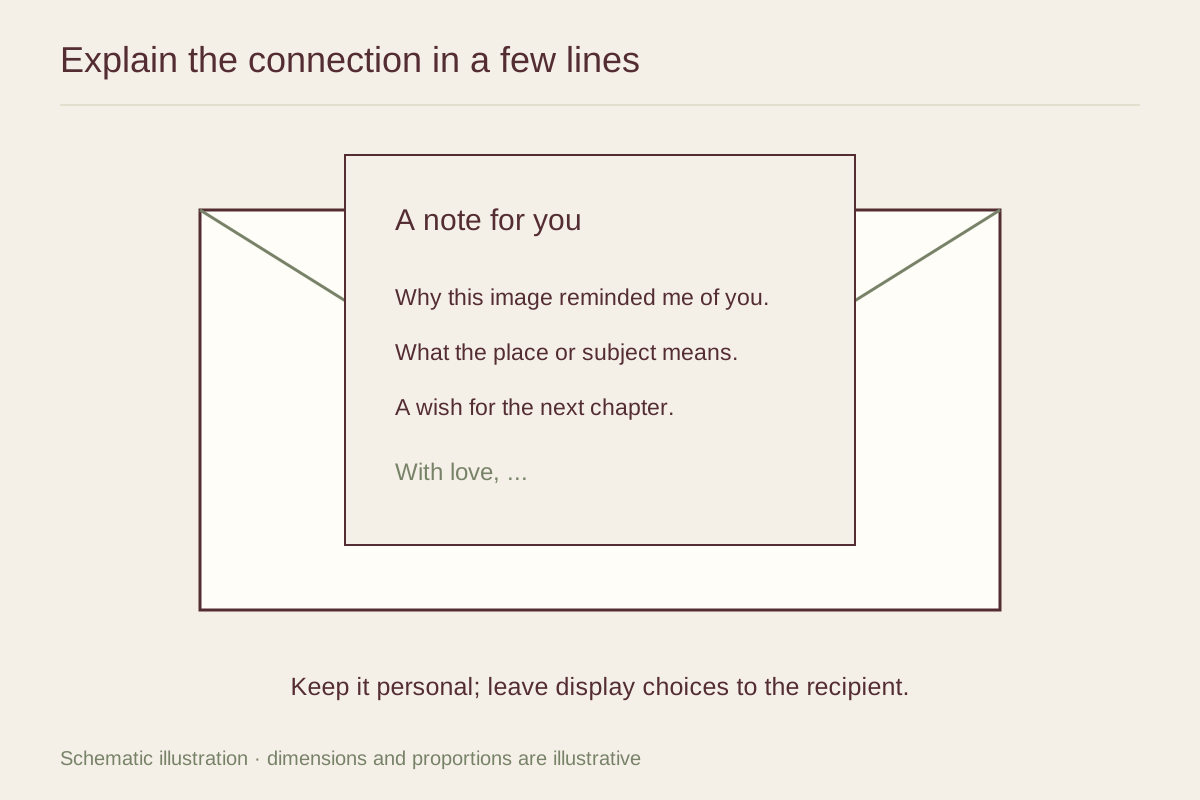
Name the connection
Mention the place, memory or detail that led you to choose the image. “The blue doorway reminded me of our walk through the old town” gives the recipient something personal to recognize. A broad phrase about beauty says much less about the reason for the gift.
Keep the story proportionate to the occasion. If the image recalls a private or difficult memory, consider whether the recipient would want that story read aloud in front of others. A separate sealed card may be more appropriate than a label attached to the front of the package.
Leave room for their own response
Avoid writing that the picture will look perfect above the sofa or that they must think of you whenever they see it. Those expectations turn a gift into an instruction about the recipient’s home and feelings.
You can say what you enjoyed in the image while acknowledging that they may find something different. A note need not provide a complete interpretation or explain every symbol.
Separate useful facts from the message
The artist or seller’s name, print dimensions and care information are useful, but they do not all belong in the personal note. Keep those details on the supplied documentation or in a second small envelope.
If you have arranged framing or included an exchange option, state it plainly. The recipient should not have to infer whether they are allowed to change the frame or choose another print.
Keep the physical note safe
Write on a separate card rather than on the artwork or its mat. Ink, pressure and adhesive can mark materials, and the recipient may later want a different presentation.
Date the card if you would like the occasion recorded. A brief, recognizable message in your own words is enough to give the artwork a story it would not have had on its own.