Check the frame before covering it
Inspect the glazing, corners and back. Make sure the artwork sits correctly and that there are no loose pieces inside the frame. If the frame has a folding stand or projecting hanging hardware, note those areas because they can press through wrapping or rub against another surface.
Confirm that the frame is structurally sound before transporting it. A loose corner or damaged backing should be addressed by the seller or a framer, not hidden under padding. Photograph the finished piece for your own reference before packing.
Keep the first layer gentle
Use a clean, soft protective layer suitable for the frame finish. Avoid abrasive paper against delicate surfaces and do not apply tape directly to the frame, glazing or artwork. If the seller supplied protective materials and instructions, retain them for the handoff.
The goal is to prevent rubbing without creating pressure on the center of the glazing. Do not place a hard gift tag, ribbon knot or small accessory where it can press against the front. Keep decorative items outside the protective package.
For an unglazed or unusually textured artwork, do not assume ordinary wrapping can touch the surface safely. Ask the maker or a framer how it should be protected. This article concerns an ordinary small framed print, not an original painting with a vulnerable surface.
Protect the corners and control movement
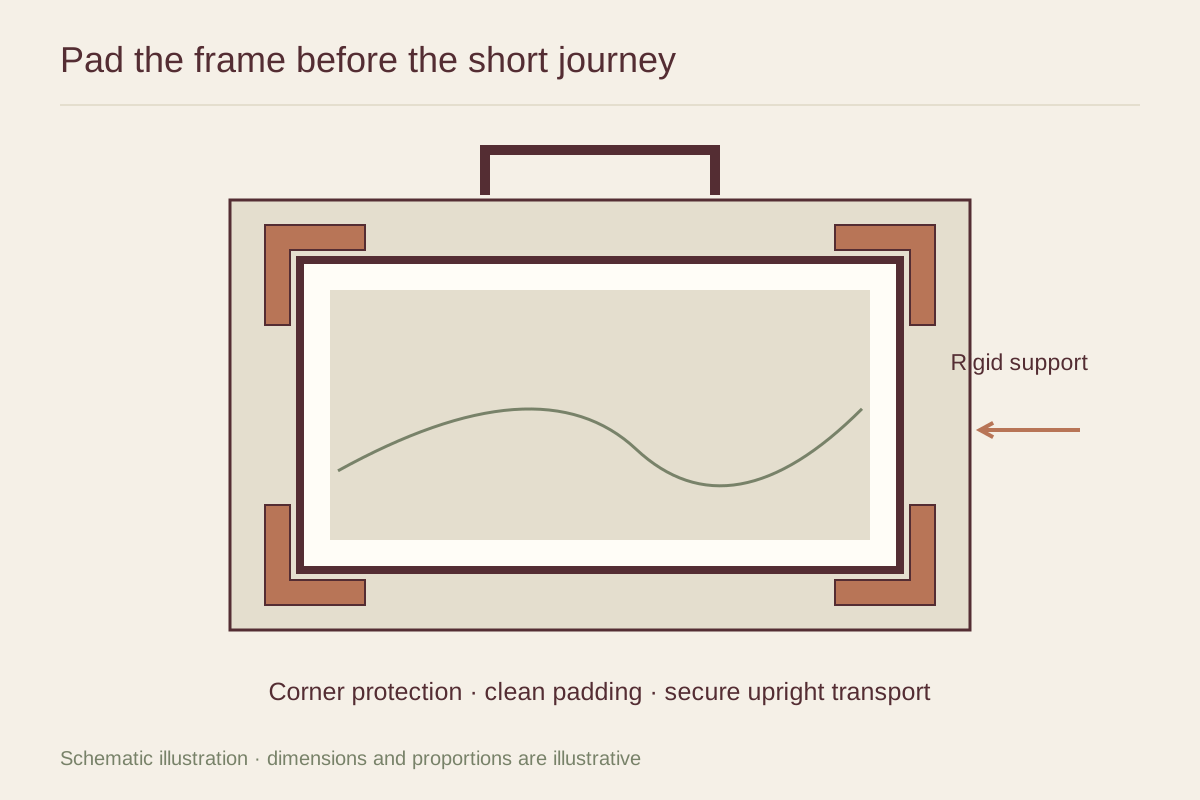
Corners are easy to knock against a doorway or the edge of a car seat. Suitable corner protection and cushioning help keep the frame from taking the full impact. Choose materials that fit without forcing the frame or distorting its joints.
Place the protected frame in a box that allows cushioning around it without letting it slide freely. Fill gaps so the package remains stable when carried, but do not compress materials tightly against the glazing. The object should be supported, not squeezed.
A bag can be convenient for a very short handoff, but only if the frame is already protected and the bag can support its weight. A thin decorative bag is not a substitute for a stable package. Check that handles and the bottom are secure before lifting.
Keep the gift note accessible
Put the card and product information where the recipient can find them without digging between layers around the frame. Avoid placing a loose envelope directly against an exposed print surface. A small pocket on the outside of the protective box can keep the paperwork together.
If the frame contains glass, label the package clearly and mention it at the handoff. A decorative exterior should not conceal the need to handle the object with care. Marking the preferred orientation can also help the recipient carry it comfortably.
Plan the short journey
Carry the package in a stable position and keep it away from heavy objects that could fall or press against it. In a vehicle, secure it so it cannot slide during braking. Do not leave it where heat, moisture or direct sun can affect the frame or print while you run other errands.
Hand the gift to the recipient directly rather than leaving it leaning in a busy doorway. Explain how to open the package and suggest doing so on a clear surface. Sharp scissors or a knife should not be pushed through wrapping close to the frame.
Know when the packing job is different
Shipping through a carrier involves more handling and impact than a short local trip. Large frames, valuable pieces and fragile glazing may need professional packing or a method specified by the seller. Do not treat a successful walk across town as proof that the same package is suitable for parcel shipping.
Keep any original protective box until the recipient has decided where the gift will live. It may be useful for a later move, especially if its fit and cushioning were designed for that particular frame.