Decide how much attention the image asks for
A quiet scene with one impossible detail may sit comfortably beside a chair. A densely populated fantasy with sharp contrasts may demand more attention. Neither is wrong, but the image should support the way you use the space. If you often look up while reading, a layered picture can offer a rewarding pause.
Look for a composition that remains clear at a modest size. A tiny figure or hidden object may be central to the image's meaning. If it disappears in the available print size, choose a closer viewing position or a different work rather than assuming the detail will be visible once framed.
Consider the emotional tone as well as the visual style. Dreamlike can mean playful, unsettling, lonely, or expansive. Spend time with the actual image before buying, especially if the reading corner is a place where you seek a particular atmosphere.
Make a small, complete arrangement
The chair, light, side table, and artwork already form a useful group. A restrained frame can leave the unusual content inside the image as the main surprise. A dark molding may connect with the lamp; a warm wood may relate to the chair without matching it exactly.
Place the picture where it can be seen from the chair and approached without moving furniture. Avoid hanging it so low that books or a lamp shade obscure an important part. Test reflections from the reading light, which may be more relevant than daylight in a space used mainly in the evening.
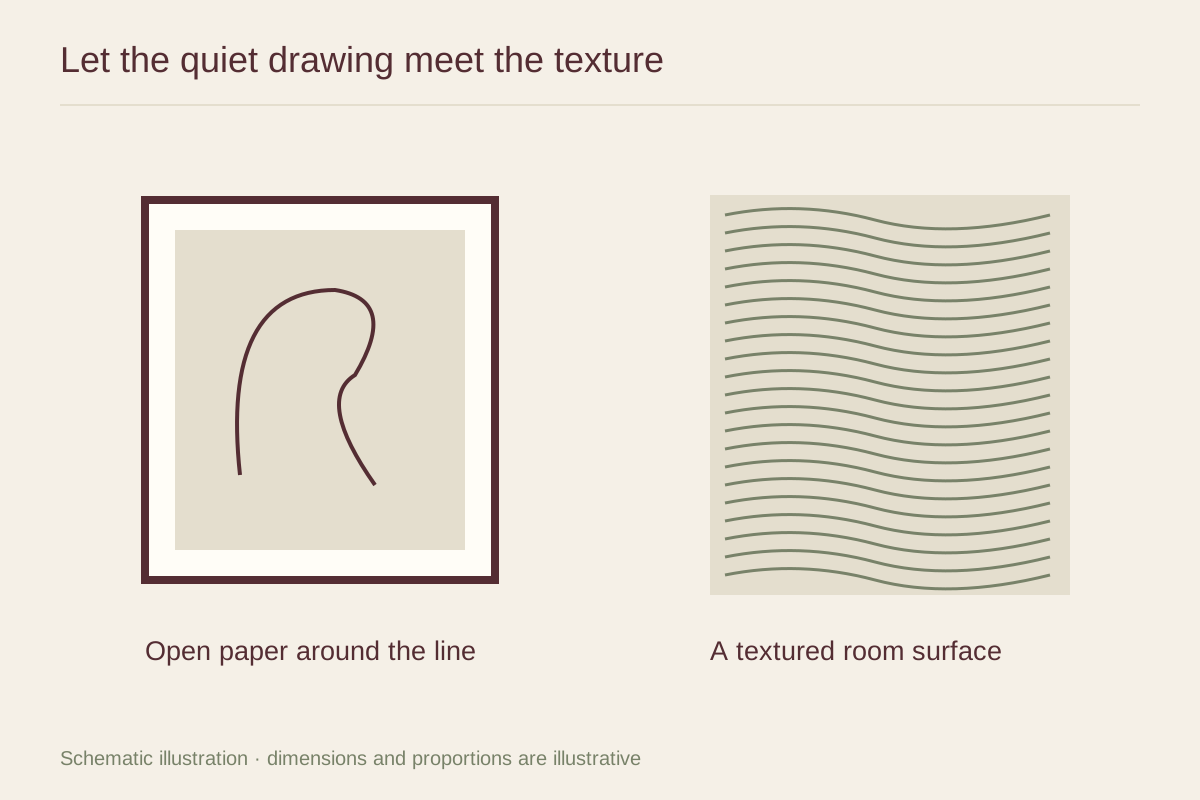
Leave enough blank wall that the picture can feel like a distinct opening into another scene. Adding several similarly strange objects nearby can flatten the effect by making everything equally unusual. One considered image often has more room to unfold when the surrounding objects remain familiar and useful.