Start with image detail
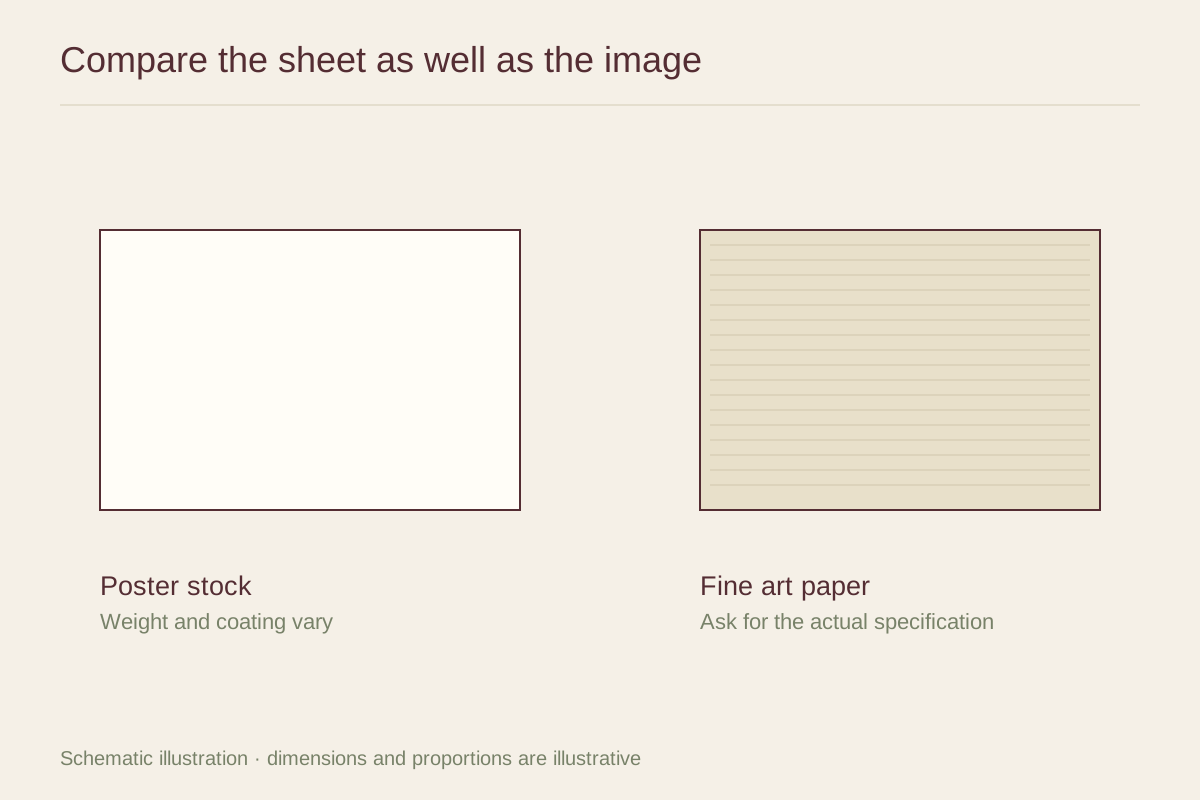
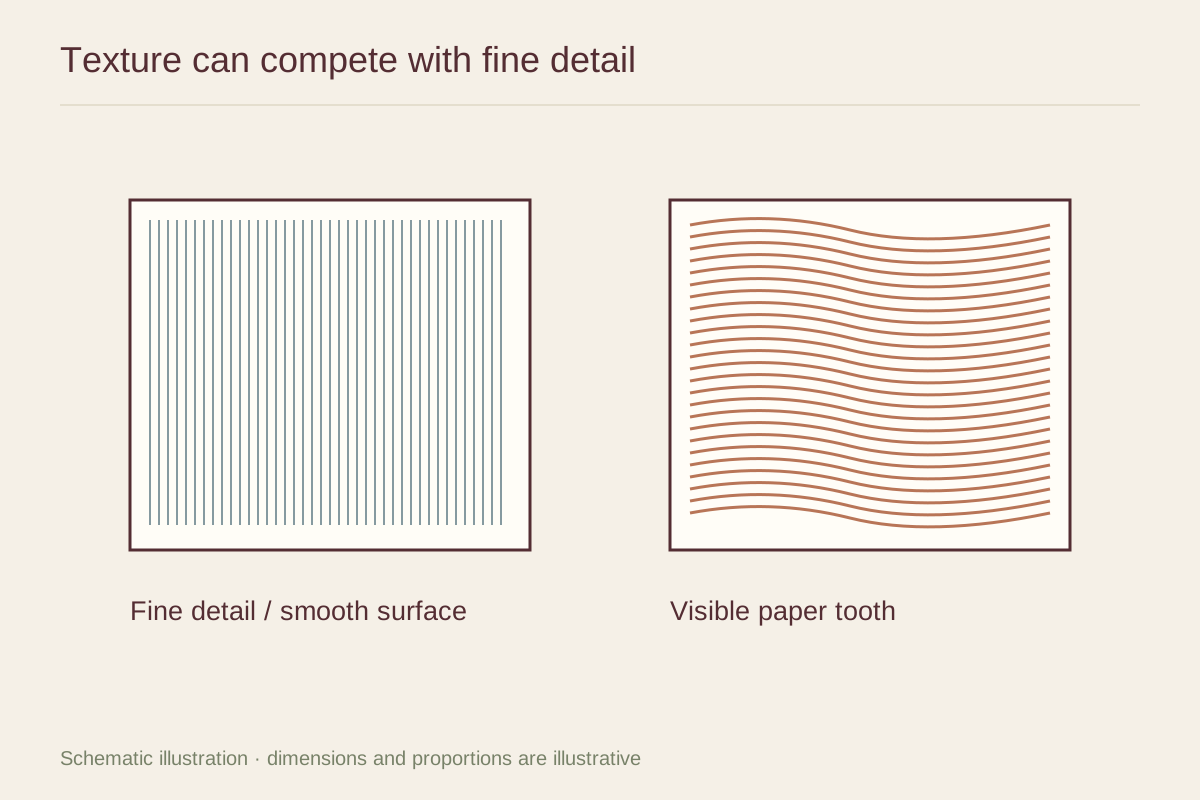
A canvas weave becomes part of the picture. Large shapes, broad color transitions, and loose brushwork in a reproduction may work well with that surface. Tiny lettering, delicate photographic detail, and fine line illustration deserve a close sample before you commit. Paper can also be textured, so the comparison should be between actual products rather than between an imaginary smooth paper and every possible canvas.
Order a small proof or request a detail photograph from the printer. In particular, inspect faces, thin diagonal lines, and the darkest areas. A room mockup is helpful for scale but usually cannot show how the print surface affects those details.
Account for the wrapped edges
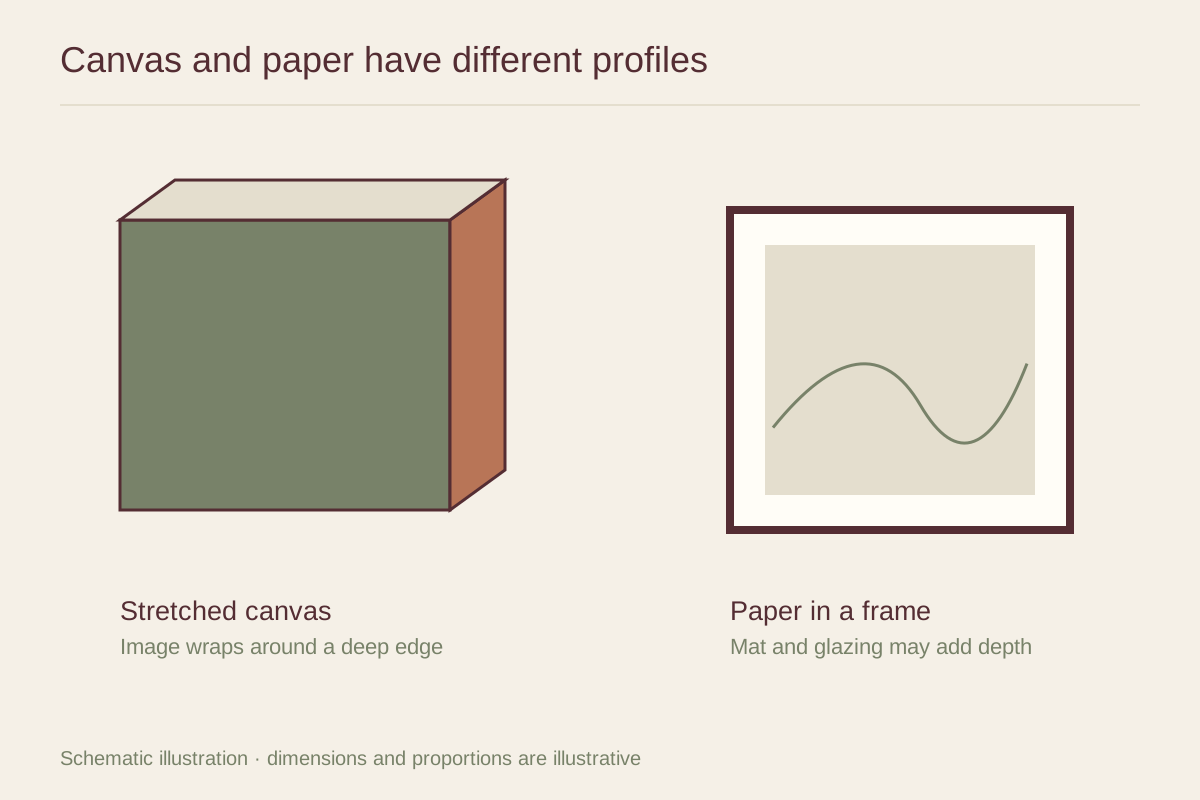
A stretched canvas may wrap the image around its sides. That uses part of the composition, and a face or signature near the edge can disappear from the front. Other options include a solid color edge, a mirrored extension, or extra image area supplied specifically for wrapping. Review the full production preview and ask exactly where the front face ends.
Measure the depth as well as the width and height. A deep canvas can project strongly into a narrow passage and cast a noticeable side shadow. A thin paper print might ultimately be housed in a deeper frame, so compare finished dimensions instead of assuming one format is always more compact.
Plan the border and protection
A paper print can sit behind a window mat, show a printed border, or display its whole sheet in an appropriate float mount. Those choices offer different amounts of breathing room around the image. A canvas is often shown without a mat, either alone or inside a canvas float frame with a deliberate gap around its edges.
Do not assume an exposed canvas surface is washable because it looks sturdy. Ask the printer about its coating and care instructions. Similarly, a framed paper print still needs a suitable location away from direct sun and moisture. Choose a presentation that you can maintain in the room you actually have.
Compare two finished silhouettes
Use paper templates on the wall to represent the total outer dimensions of each option. Include the mat and frame for the paper version, and any float frame for the canvas. A 16 by 20 inch image can occupy very different amounts of wall in those two treatments. Decide whether you want an image that reads as a contained rectangle or an object whose visible sides contribute to the room.