Describe the surface accurately
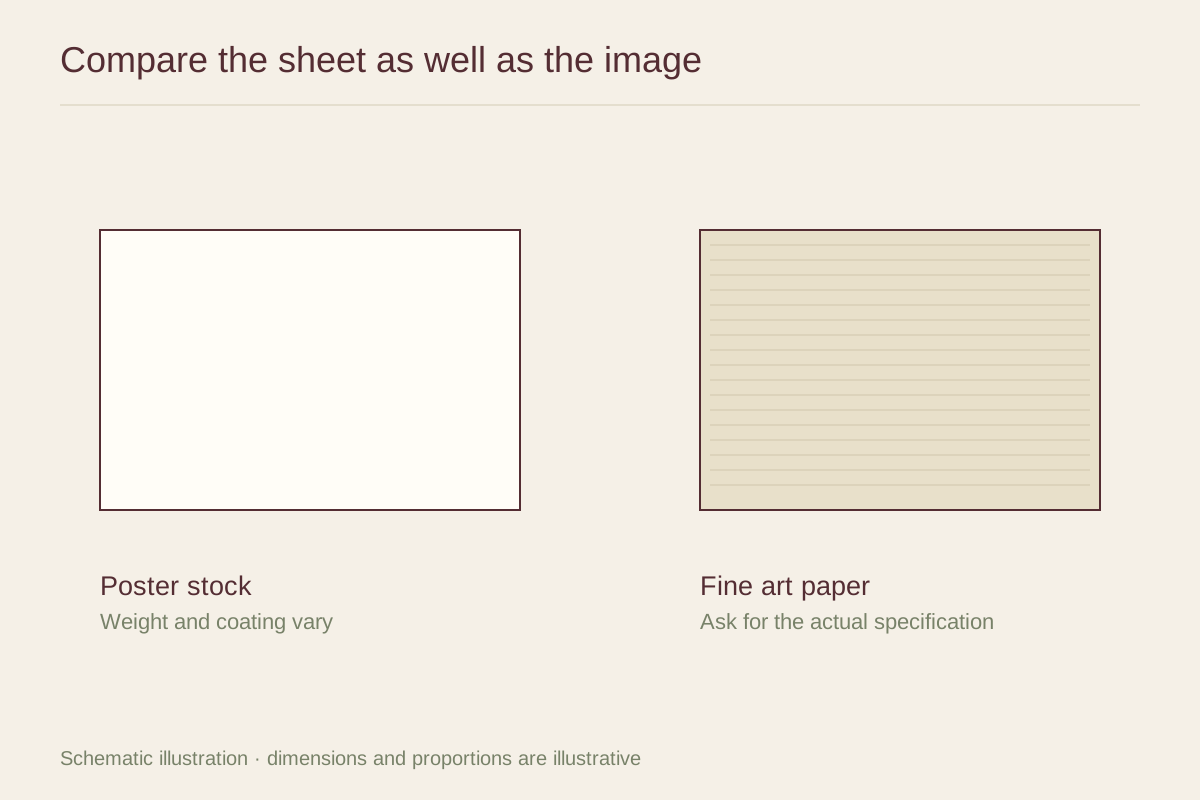
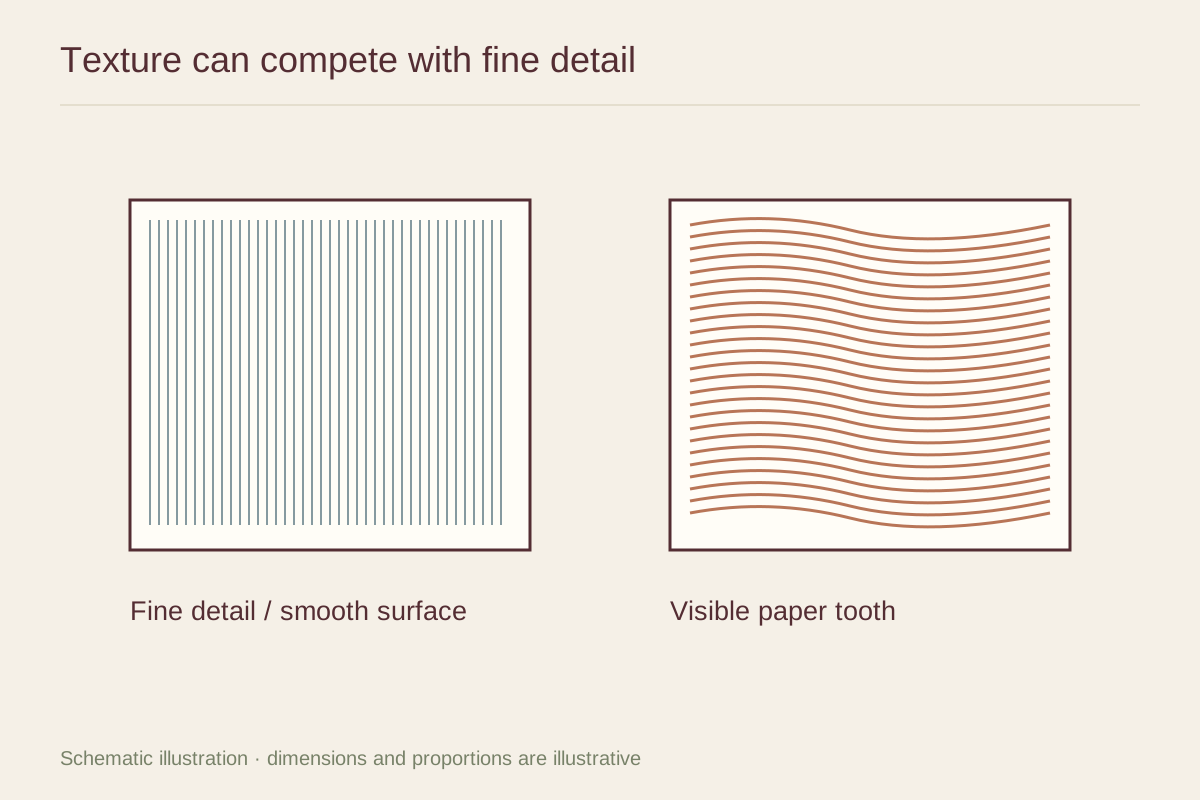
Start by identifying what creates the texture. It may be the paper itself, an embossed area, a thick printed coating, or applied material on the surface. A reproduction of a textured painting may be completely flat, while a quiet-looking blind embossing may have real relief. These are different framing problems despite similar photographs in an online listing.
Tell the framer whether you know the print's process and whether any part seems loose, brittle, or fragile. Do not rub the surface to find out. Photographs taken from the side can help explain its shape, but an in-person examination is preferable for a delicate or valuable work.
Add up the package
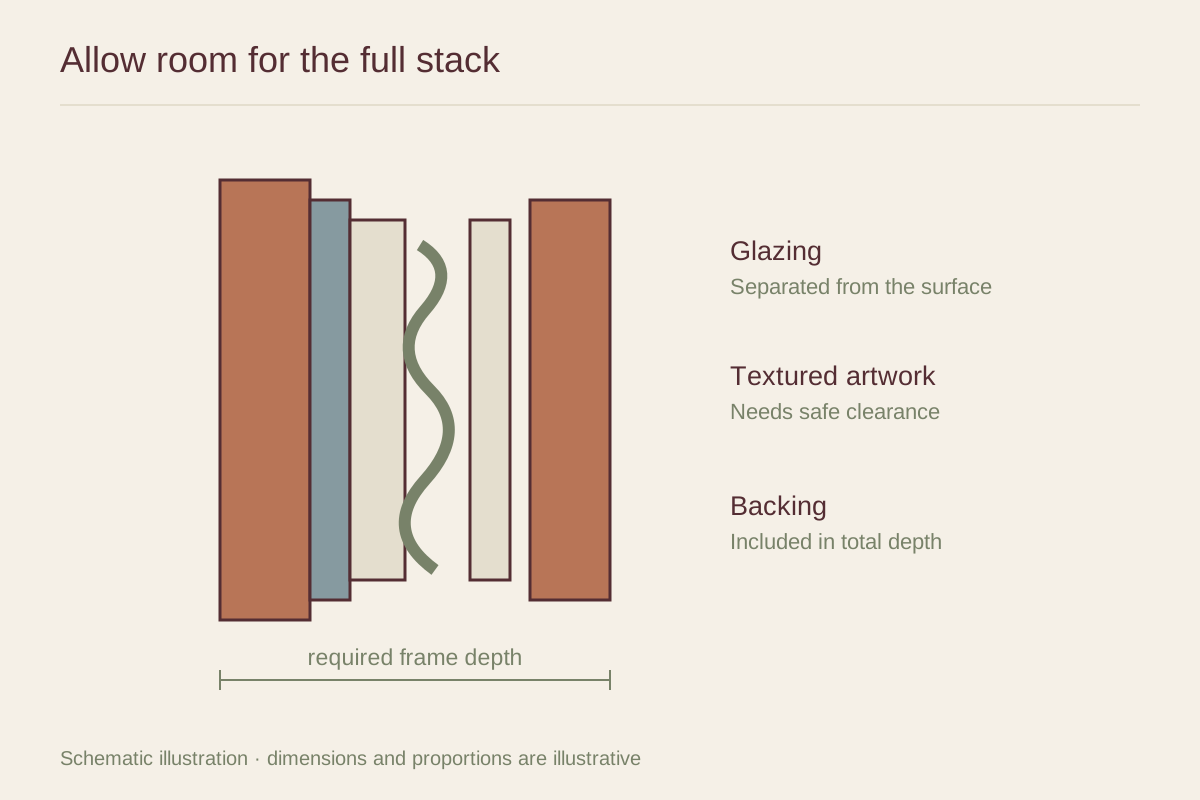
The glazing, mat or spacers, artwork and its support, backing, and retaining system all require space. The frame's rabbet is the recess that holds this assembly. Its usable depth may be substantially less than the outside side profile suggests. Request that measurement explicitly when buying an empty frame.
A ready made frame designed for a thin photograph may not accept a thick board and two mats. Clips that only close under force are a sign to stop, not an invitation to compress the contents. The solution may be a deeper molding or a different construction, rather than a thinner protective layer chosen solely to make everything fit.
Keep the highest point clear
The artwork needs separation from the glazing, including its highest raised area. A mat that clears most of the sheet may still leave an embossed crest or applied detail too close to the front. The framer should assess the entire surface and allow for the way the assembly behaves when upright.
Acrylic can flex, especially across a larger opening, so the required thickness and spacing depend on the size and construction. There is no single gap dimension that works for every textured print. Ask for a side-section explanation of the proposed frame if the artwork has pronounced relief. A simple sketch can make an unfamiliar package understandable.
Make the depth part of the design
A deep frame casts a side shadow and projects farther from the wall. That can look intentional beside substantial furniture, yet feel intrusive in a tight corridor. Use a folded cardboard mockup to represent the outside depth, keeping it separate from the artwork, and view it from the room's normal approach.
Choose whether the front edge should be visually quiet or emphasize the object-like quality of the print. A narrow face with deep sides gives a different effect from a broad shallow molding. The correct internal construction comes first; within that requirement, there may still be several visual profiles to compare.
Ask how it will be serviced
A complex frame should be capable of appropriate inspection and maintenance by someone who understands the assembly. Request a record of the mounting method and materials, especially if the print has unusual relief. Keep that record with the purchase information rather than attaching new notes directly to the artwork.
When collecting the finished frame, look at it upright from the front and side. Check for visible contact with glazing, shifted spacers, or a print that appears pinched. Ask the framer about anything unexpected before transporting it home. Depth is not merely a styling choice; it is the space that allows the intended presentation to exist without pressing the object into an unsuitable shape.